Last updated: June 2026 — prices verified June 2026.
Right, this is also where I admit: I bought the wrong Angkor pass tier on my first proper visit — three-day when I actually needed five. Spent a morning sorting it. Buy seven days. At $72 it’s the best-value archaeological access in Southeast Asia and you’ll use more days than you expect.
Angkor Wat Pass: Which Ticket to Buy
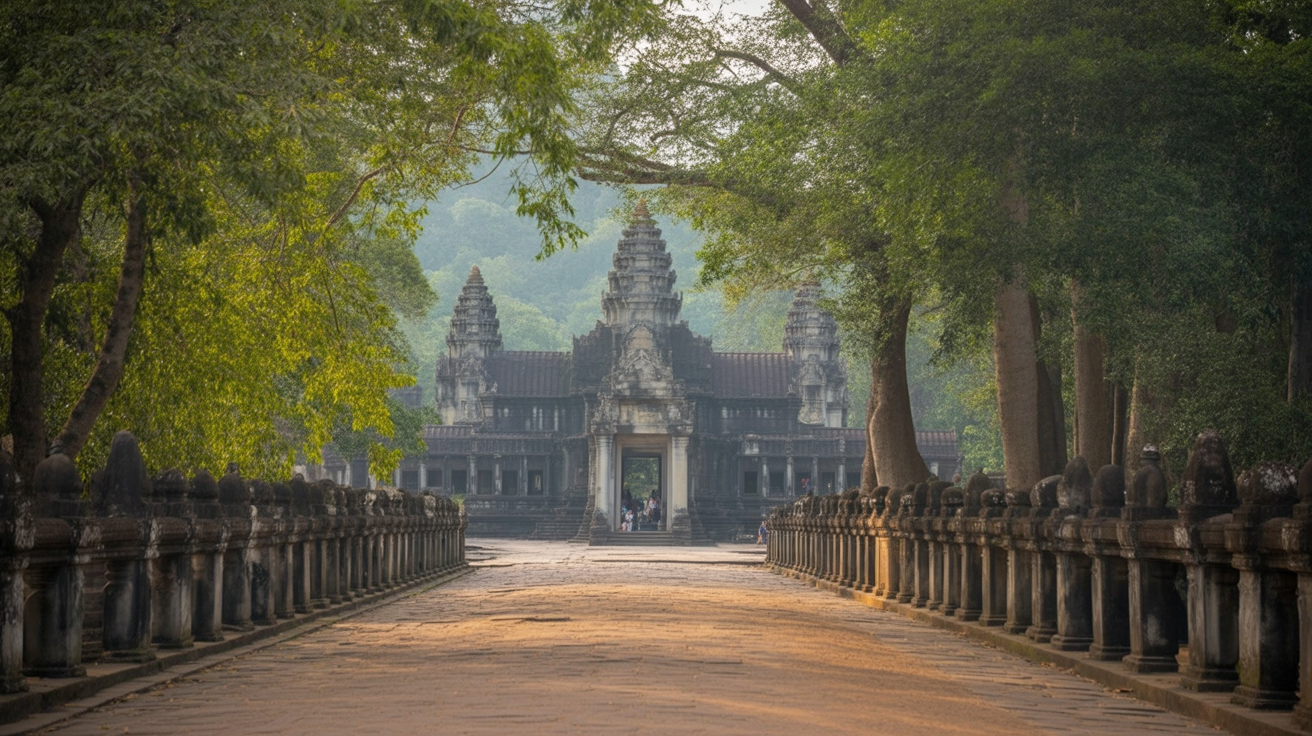
The maths: three-day is $62. Seven-day is $72. For $10 more you get four extra days. The seven-day pass doesn’t require consecutive days — you can use any seven days within a month. This means a day at Angkor Wat, a day trip to Phnom Penh, another day for Ta Prohm, all on the same pass. Buy seven days.
⚠Real Talk
Enter the Angkor complex after 5pm and it doesn’t count as a day on your pass. The afternoon light on the west-facing main temple is extraordinary from 4–6pm. Walk the moat, photograph the reflection, watch the light shift. Free day-pass management, and the crowds are gone by 5:30pm.
How to Get Around the Temples
The Angkor Archaeological Park covers 400 square kilometres. The main temples are spread over roughly 10km. You need transport — this is not a walking destination in any normal sense.
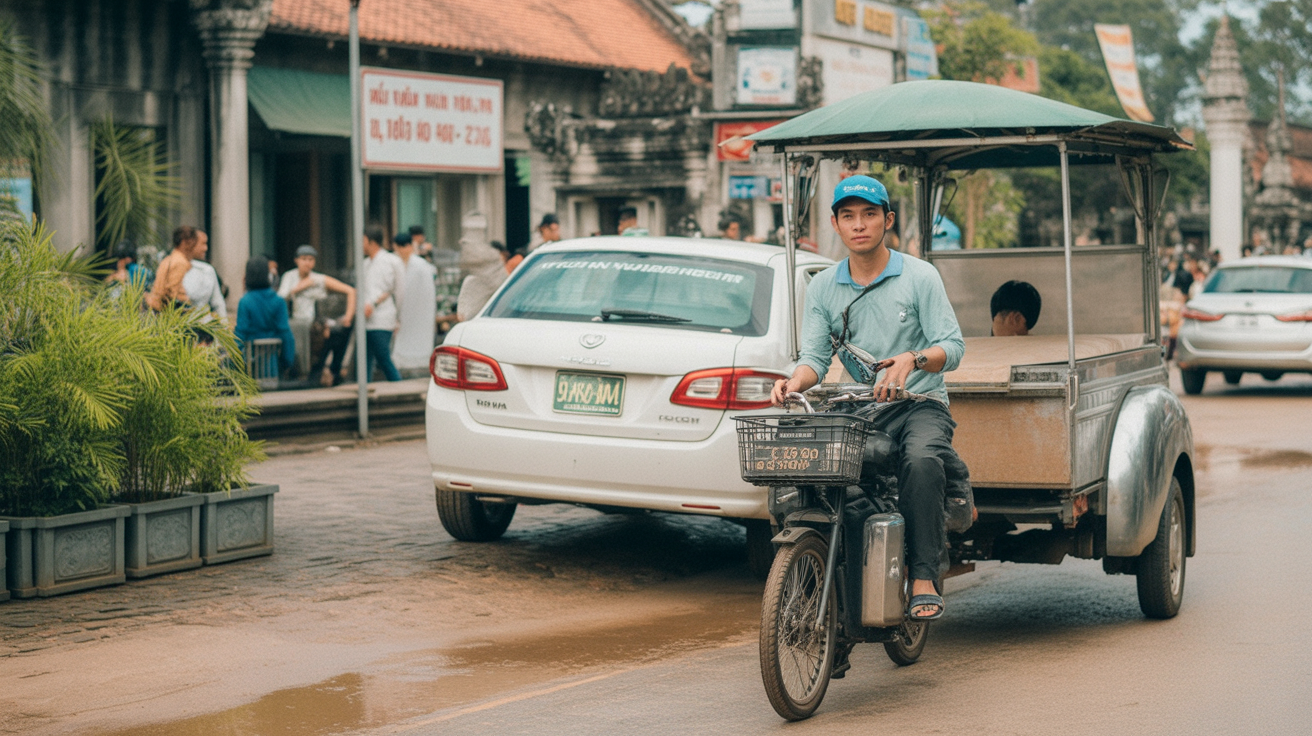
Tuk-tuk and driver: The standard and my recommendation for first-time visitors. A good tuk-tuk driver — and there are many — knows the timing, knows which temples are crowded when, and will adjust the day’s order to put you at the right place at the right time. Cost: $15–25 per day. Negotiate the evening before through your guesthouse or directly with drivers at your accommodation. Agree on the circuit (Small, Large, or specific temples) and the timing upfront. The relationship with a good driver is worth more than the transport.
Private car or van: $30–40/day for a sedan, $40–50 for a van. Better than a tuk-tuk in the rain (which is not rare from May–October) and in the middle heat of day (which is unavoidable year-round). The trade-off is that you’re more insulated from the atmosphere. For families, groups of four+, or wet season visits, worth it.
Bicycle: $5–10/day rental from Siem Reap guesthouses. The correct choice in the cool season (November–February) when 30°C is manageable and the 8km cycle to Angkor Wat from town is genuinely pleasant in the morning. In March–October, the combination of heat and 35km+ of cycling to cover the main sites becomes less enjoyable than it sounds. I’ve done it in April. I know exactly which decision not to repeat.
Electric scooter: Increasingly available from Siem Reap rental shops, $10–15/day. The middle option — faster than a bicycle, more flexible than a tuk-tuk, less hot than cycling. Works well if you’re comfortable on a scooter.
Guided Tour vs Self-Guided: The Honest Breakdown
Here’s the thing — both options work, and the right one depends on what you want from the temples.
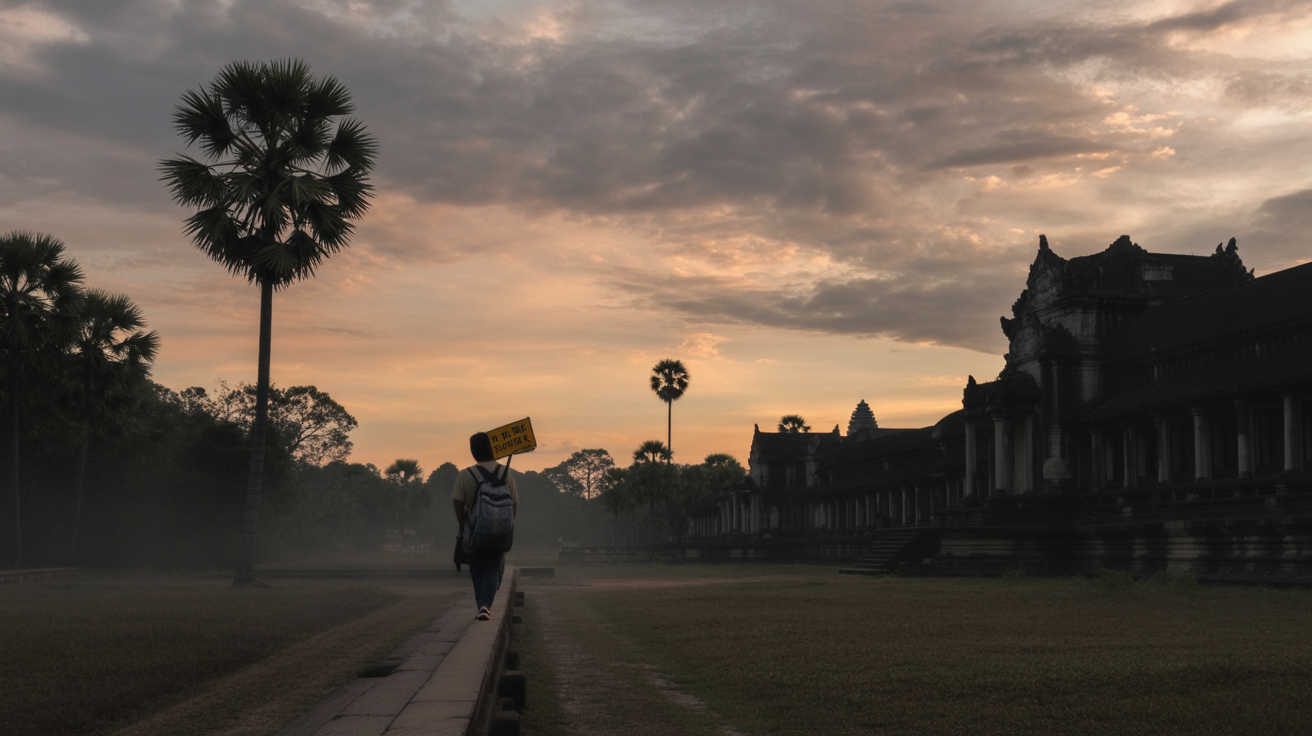
Self-guided: Completely fine. The temples are labelled, maps are good, and Angkor Wat itself is impossible to misread. You move at your own pace, stop when you want, and don’t have a group schedule to match. The downside: the iconography and history of the Khmer Empire are genuinely complex, and standing in front of a 12th-century bas-relief without understanding what it depicts is a missed opportunity. Download a guidebook app before you arrive.
With a local guide: Specifically useful for Angkor Wat’s bas-relief galleries (the 500-metre long narrative panels — Hindu cosmology, Khmer military history — that most self-guided visitors walk past without understanding), the Bayon faces (their significance in Jayavarman VII’s Buddhist politics), and Ta Prohm (the history of its deliberate partial restoration by the French). A half-day guided tour of Angkor Wat alone costs approximately $18–30. A private full-day guide runs $50–80. Worth it for at least one morning.
Organised tour packages: Group tours from Siem Reap hotels or Viator/GetYourGuide run $40–80 for a full day with guide and transport. Convenient if you want everything arranged. The downside is group pace and fixed schedule — sunrise at 5:30am with thirty other people is a different experience from arriving independently.
The Small Circuit: What to Prioritise
The Small Circuit covers the main Angkor Wat / Angkor Thom cluster — the temples most visitors come for. It’s approximately 17km of road connecting the major sites. A full day with a tuk-tuk and your own pace.
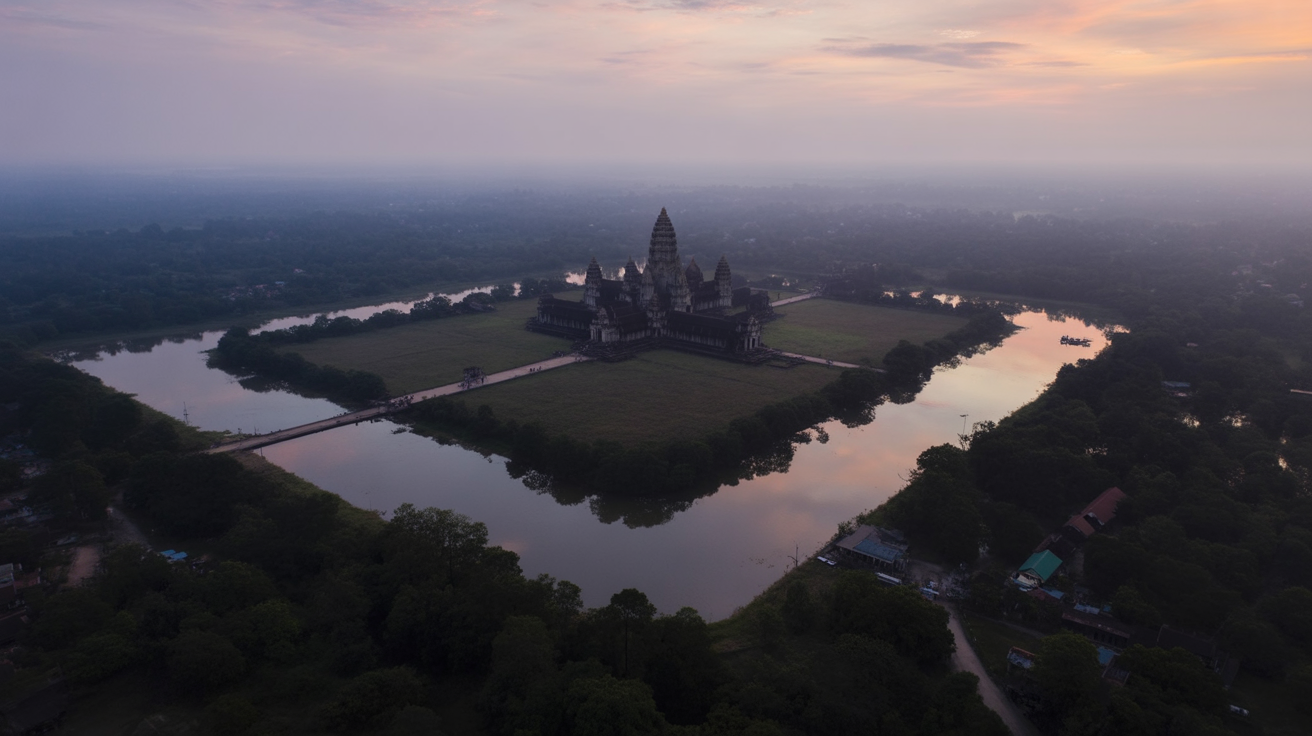
Angkor Wat: The main event. Built in the 12th century by Suryavarman II, the largest religious monument ever constructed. The scale is something photographs don’t communicate — the outer moat is 190 metres wide, the main temple rises to 65 metres. Allow 2–3 hours minimum to do it properly. The bas-relief galleries on the lower level are the part most visitors rush: 500 metres of continuous stone carving depicting scenes from the Mahabharata, the Ramayana, Khmer military history. Stop at the Churning of the Ocean of Milk panel (east gallery) and spend 20 minutes understanding what you’re looking at. It’s worth it.
Angkor Thom and the Bayon: The walled city of Angkor Thom (3km sides, 8 gates) contains several major temples. The Bayon — 216 stone faces of Jayavarman VII, built in the late 12th century — is the image you’ve seen. At 7–8am, before the day tours arrive, the face towers in the morning light are the closest thing to an uncrowded major Angkor experience available. Allow 1–1.5 hours.
Ta Prohm: The “jungle temple” — the one where tree roots have been allowed to grow through and over the stone. Made famous by Tomb Raider (2001). Deliberately left partially unrestored by the French archaeologists to demonstrate the power of tropical vegetation. Genuinely extraordinary. Also genuinely crowded between 9am and 3pm. Go early morning or late afternoon. Allow 1 hour.
Baphuon: Inside Angkor Thom, often skipped. The restoration — reassembling 300,000 stones that were disassembled before the Khmer Rouge stopped everything — was one of the most complex archaeological reconstruction projects of the 20th century. The result is a 43-metre pyramid temple that you can climb. Worth 30 minutes.
The Large Circuit: What’s Out There
The Large Circuit extends to temples further from the main cluster — approximately 26km route. These see fewer visitors and reward the time to reach them.
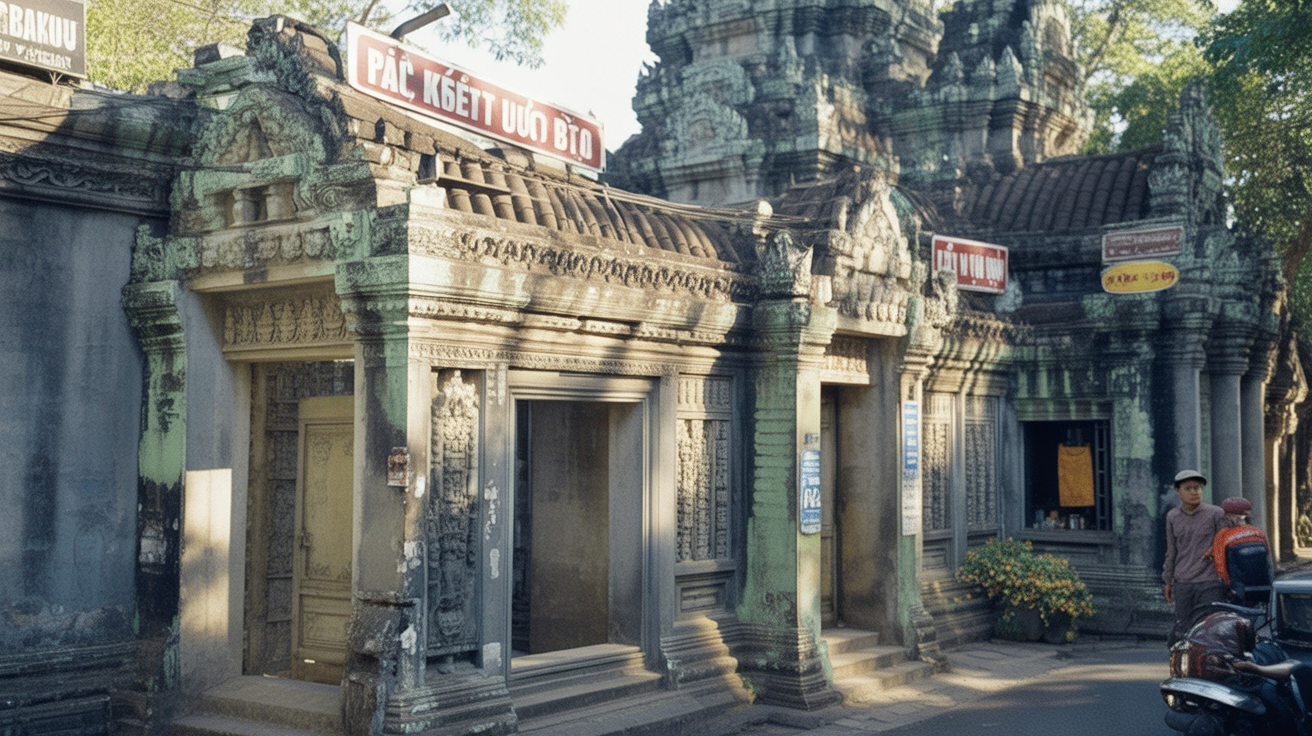
Preah Khan: A 12th-century temple city built by Jayavarman VII, contemporary with the Bayon. Roughly the same size as Ta Prohm but significantly less crowded. The colonnaded corridors and doorway sequences are better for photography than Ta Prohm. If you only add one Large Circuit temple, add this one.
Neak Pean: A small temple island on an artificial reservoir, accessible via a wooden walkway. Architecturally unusual and historically interesting as a site of water-based religious ritual. Brief stop (30 minutes) but worthwhile for the visual contrast with the stone-heavy main circuit.
Banteay Srei: 38km north of Siem Reap, outside the main Archaeological Park. Pink sandstone, extraordinary carving detail — some of the finest in the entire Angkor complex. Requires separate transport (add to tuk-tuk or car day). Worth a half-day specifically for this temple if you’re interested in Khmer decorative art.
Sunrise at Angkor Wat: The Reality
The sunrise at Angkor Wat is real — the pink light coming over the east, the temple reflected in the moat’s north reflection pool, the sound of the jungle waking up. It is also, in peak season (November–February), a crowd of 500–1,000 people arriving at the same pool.
The honest logistics: arrive by 5:15–5:30am for a position at the main reflection pool (left side of the path, north pool). The entrance gates open at 5am. Tour groups arrive in waves from 5:30am onwards. By 6am on a busy day the pool edges are full. By 6:30am the moment is over and the photographers are all looking for the second shot.
The best sunrise positioning secret: the reflecting pools on the right (south) side are less photographed and less crowded. You’ll still get the temple in silhouette. You’ll have more room.
Alternatively — the Phnom Bakheng temple, a hill temple 1.5km from Angkor Wat’s main gate, has a controlled capacity of 300 visitors for sunset and gives a different elevated view. It fills fast; get there 2 hours before sunset.
When to Visit Angkor Wat
The dry season (November–April) is the main tourist season and for good reason: clear skies, no rain, all roads open, sunrise reliable. The peak within the peak is December–January (school holidays) and the Khmer New Year in April. These are the most crowded and most expensive periods for accommodation in Siem Reap.
The best Angkor months by my calculation: late October and November (just after the wet season — the moats are full, the vegetation is green, fewer crowds than December, prices not yet at their peak) and late February to early March (crowd drop after Chinese New Year, still dry season, good light).
Wet season (May–October): the rain is real but predictable — heavy afternoons, clear mornings. The temples are half-empty. The moats are full. The stone turns darker in the wet. If you can handle afternoon thunderstorms and some flooded roads, wet season Angkor is a genuinely different experience from the dry season version. I’d take it over December crowds without much hesitation.
The Confession: My First Angkor Pass Mistake
My first extended Angkor visit, I bought the three-day pass. I used two days, then realised I wanted to go back to Preah Khan specifically, and discovered I was on day three with a full afternoon still planned. Added Banteay Srei to the plan, used the third day for that trip, and then couldn’t get back to Ta Prohm in the late afternoon as planned because the pass was finished.
The seven-day pass costs $10 more than the three-day. I’ve never bought anything except the seven-day pass since. The pass is valid for any seven days within a month — you don’t have to use them consecutively. That flexibility alone is worth the $10 difference. Buy seven days. You’ll thank yourself.
FAQ: Angkor Wat Tours
- What is the best Angkor Wat tour?
- A private tuk-tuk driver for the day ($15–25), combined with a licensed local guide for Angkor Wat specifically ($18–30 half-day). This gives you transport flexibility and the historical context that makes the main temple’s bas-reliefs and architecture actually meaningful. For group options, dawn sunrise tours from Siem Reap hotels are the most common format — useful if you want the logistics handled, limiting if you want to move at your own pace.
- How much does an Angkor Wat tour cost?
- Pass: $37 (1-day), $62 (3-day), $72 (7-day — buy this). Transport: tuk-tuk $15–25/day, private car $30–40/day, bike $5–10/day. Local guide: $18–30 for half-day Angkor Wat, $50–80 full day. Organised tour package from tour operators: $40–80 per person including transport and guide. Budget a full day in Angkor Wat at $80–120 per person including pass, transport, guide, and water.
- Is it better to do Angkor Wat with a guide or self-guided?
- Self-guided is completely feasible — the temples are labelled and the main circuit is intuitive to navigate. A guide adds real value specifically at Angkor Wat’s bas-relief galleries, the Bayon’s face towers, and Ta Prohm — where the history behind what you’re looking at transforms the experience. Consider a half-day guided tour for Angkor Wat itself, then self-guided for the rest of the circuit.
- What time should I arrive for Angkor Wat sunrise?
- By 5:15–5:30am for a position at the main north reflection pool. Gates open at 5am. Tour groups arrive in waves from 5:30am; by 6am on a busy day (peak season) the pool edge is full. The south reflection pool is less crowded and gives the same temple silhouette shot. The sunrise period is approximately 5:45–6:15am year-round. Buy your pass the previous afternoon to save time at the gate.
- How many days do you need at Angkor Wat?
- Minimum two full days: Day 1 covers Angkor Wat (sunrise + morning) and Angkor Thom/Bayon (afternoon); Day 2 covers Ta Prohm, Preah Khan, and a Large Circuit temple. Three days if you want Banteay Srei (38km north, worth it), Beng Mealea (jungle temple, 65km east), and time to revisit your favourites with the afternoon light. Buy the 7-day pass regardless.
- What is the best temple at Angkor after Angkor Wat?
- The Bayon (faces of Jayavarman VII, inside Angkor Thom) for visual impact. Preah Khan for atmosphere and fewer crowds than Ta Prohm. Banteay Srei for the carving quality — pink sandstone, extraordinary detail, the most refined decorative work in the complex. If pressed to one: Preah Khan, because you can walk its corridors in relative peace and the architecture tells a complete story.
Planning Basics
Angkor pass purchase: The Angkor Enterprise ticket office is on Road 60, approximately 4km from Siem Reap town centre. Open from 5am. Cash, card, USD accepted. Buy the previous afternoon to avoid queuing at sunrise. The pass photo is taken at the gate — no need to bring a passport photo.
What to bring: Water (at least 2 litres per person per day — more in March–April), sun protection, covered shoulders and knees (required for Angkor Wat’s inner sanctuary), good walking shoes. The stone paths are uneven; flip-flops are doable for short visits and genuinely uncomfortable for full days.
Siem Reap to temples: 7–8km from central Siem Reap to Angkor Wat’s main gate. A tuk-tuk takes 20 minutes; a bicycle takes 30–40 minutes in the morning. The road is well-maintained and well-signed.
For the full temple-by-temple breakdown of what to see in the complex: Things to Do in Siem Reap covers the wider context. If this is your first time planning a Cambodia trip: Angkor Wat Tickets: What to Buy and Where covers the pass logistics in full.
Food and Drink at the Temples: What to Know
The Angkor Archaeological Park has food stalls and restaurants at the main temple clusters — Angkor Wat, Ta Prohm, and near the Bayon. Prices are tourist-facing: expect $5–10 for a simple rice or noodle dish, $2–3 for water, $3–5 for a cold drink. Not outrageous by international standards. Still roughly 3–4x the Siem Reap local rate.
Bring your own water. The heat at Angkor between 10am and 3pm is real and dehydration happens faster than you’d expect. Budget 1.5–2 litres per person per day minimum, more in March–April. Water is available at every food stall; the convenience of having it in your bag is worth the weight.
The most sensible approach to food: eat breakfast in Siem Reap before departure, use the temple food stalls for a mid-morning snack or early lunch, and be back in Siem Reap for dinner at normal local prices. Pub Street in Siem Reap is the tourist-facing option; the side streets around it and the area around the Old Market (Psar Chas) have better Khmer food at lower prices.
For early morning sunrise visits: there are food stalls open from 5am at the Angkor Wat car park — iced coffee, bananas, fried rice. The iced coffee at 5:30am on the way in is one of those small travel rituals that makes a sunrise start feel worth it. Cost: $1–2.
Hiring a Licensed Guide at Angkor: What to Know
The licensed guide system at Angkor is worth understanding before you arrive, because the difference between a licensed APSARA guide and a self-appointed “guide” at the temple gates is significant — in both quality and price.
Licensed guides: APSARA-licensed guides have completed a training programme covering Khmer history, art history, and the specific iconography of the Angkor temples. They carry identification and can be booked through the Siem Reap tourism offices, most guesthouses, and several dedicated booking platforms. A half-day private guide for Angkor Wat specifically costs $25–35 (the bas-relief galleries alone justify this). A full-day private guide covering the main circuit runs $50–80.
Group tours with guides: Organised group tours from Siem Reap hotels and tour operators run $40–80 per person, including transport and a guide. The guide is usually licensed. The downside is group pace — you move when the group moves, stop when the guide stops, and the 5:30am sunrise call means rolling up in a minivan with fifteen other people rather than arriving in a quiet tuk-tuk at 5:15am.
The “guide” at the temple gates: At Angkor Wat and Ta Prohm particularly, you’ll be approached by individuals offering guide services from $5–10. Some of these are genuinely knowledgeable — former licensed guides, trained students, locals who’ve spent years at the complex. Some are not. There’s no reliable way to verify on the spot. The risk: being told confidently incorrect information about the bas-reliefs and iconography by someone who’s memorised a version of the story that’s been passed down with errors. For Angkor Wat specifically, where the 500-metre bas-relief gallery is dense with mythology, this matters. For wandering Ta Prohm independently, less so.
What a guide adds: The most specific value is at Angkor Wat’s east gallery (the Churning of the Ocean of Milk — a creation myth depicted across a 50-metre section of wall) and the Bayon’s upper terrace faces. Both require enough background knowledge that understanding what you’re looking at transforms the experience from impressive stonework to readable narrative. The 12th-century Khmer Empire’s political theology is embedded in every carved surface. A good guide makes it legible. Paying for half a day of guided Angkor Wat followed by self-guided exploration of the rest of the circuit is the arrangement I’d recommend to most visitors.
Book in advance: In peak season (December–February), licensed guides get booked up. Your guesthouse or a Siem Reap tour operator can arrange a guide for the following morning if you book the evening before. Don’t wait until you’re at the ticket office at 5am to discover that you needed to book 24 hours ahead.
Angkor Beyond the Archaeological Park: Beng Mealea and Koh Ker
Two major Angkor-era temples exist outside the main Archaeological Park and don’t require the Angkor pass.
Beng Mealea (65km east of Siem Reap, approximately 1.5 hours by car): a 12th-century temple roughly the same size as Angkor Wat, left almost entirely unrestored. Tree roots through stone, collapsed galleries, jungle reclaiming the corridors. Entry approximately $5. Fewer than 5% of Angkor visitors go here. The atmosphere — genuinely unrestored jungle temple, not the managed-unrestored version at Ta Prohm — is completely different from anything inside the main park. Worth a half-day if you’re spending three or more days in the area. Requires private car hire or a tuk-tuk for the distance.
Koh Ker (120km north of Siem Reap, 2+ hours): the 10th-century capital of the Khmer Empire before Angkor. A seven-tiered pyramid temple surrounded by over 30 smaller temples in the jungle. Entry $10. A full day trip from Siem Reap — an early start, a long drive, and genuinely extraordinary if you want to understand the Khmer Empire before Angkor Wat was built. Combines well with Beng Mealea on the same day if you’re organised.
You’ve got everything you need. Buy seven days. Go early. Slow down at the Bayon. And if Sopheak’s noodle cart is still on Street 308 when you get back to Phnom Penh, tell him I said hello.