Last updated: June 2026 — prices and logistics verified June 2026.
I almost skipped Phnom Penh entirely on my first trip. I had a week in Cambodia and Angkor was the obvious draw. A friend who’d been the year before told me Phnom Penh was fine but not essential. She was wrong.
I’ve been based here four years now. Here’s what you actually need to know.
How Many Days Do You Need in Phnom Penh?
Two full days is the minimum. Three is better. One is not enough — you can’t do the Killing Fields and the Royal Palace and eat properly and see the riverfront in a single day without rushing everything that deserves not to be rushed.
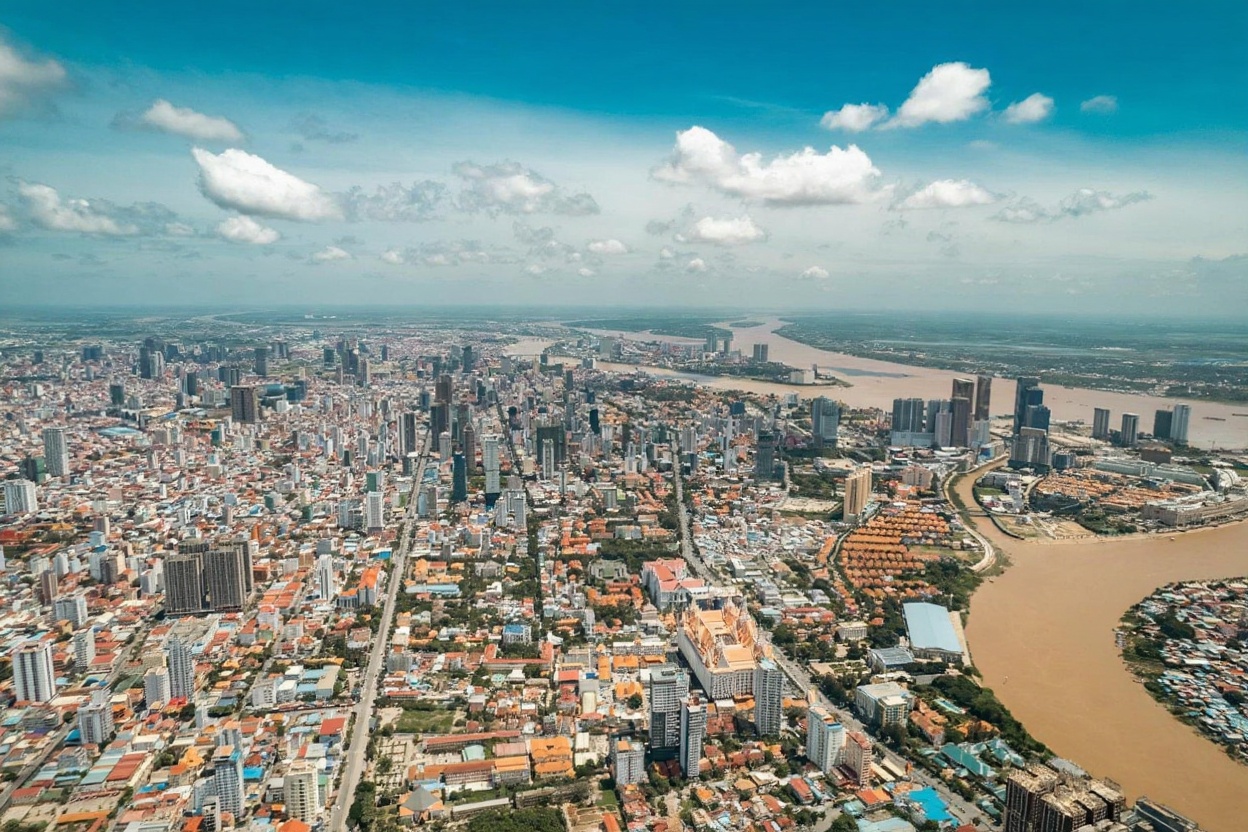
The rough shape of two days in Phnom Penh:
Day 1 — History: Choeung Ek in the morning (allow 2 hours), lunch, Tuol Sleng in the afternoon (allow 1.5–2 hours). These take more out of you than you might expect. Keep the evening light — the riverfront at dusk, a beer, dinner.
Day 2 — City: Royal Palace first (before 1pm — it closes 13:00–15:00 for lunch), National Museum, Central Market, Russian Market in the afternoon, Night Market in the evening.
If you have a third day, use it for the river: a boat trip on the Mekong, or a day trip to the silk-weaving villages near Phnom Penh.
The Killing Fields and Tuol Sleng: Visit Both, Visit First
These are not easy places to spend the morning. They are the reason Phnom Penh is a more significant city than the tourist highlights make it look. If you’re visiting Cambodia and you skip both, you’ve missed something important.
Choeung Ek Genocide Memorial (The Killing Fields)
About 15km south of central Phnom Penh — arrange transport through your hotel ($17 round trip is the going rate, or negotiate a tuk-tuk for similar). Entry: $6 (~£4.75) including an excellent audio guide. Budget at least two hours, possibly more.
Choeung Ek was one of 300+ execution sites used by the Khmer Rouge between 1975–1979. The audio guide — narrated in part by survivors — is the best single thing about the visit, walking you through the site in a way that provides context without sanitising it. The memorial stupa at the centre contains the skulls and bones of 8,000 victims exhumed from the site.
Visit in the morning. The site is outdoors, largely unshaded, and in the dry season reaches 35°C by 11am. More importantly: the morning visit gives you time to process what you’ve seen before the rest of the day arrives.
⚠Real Talk
Some visitors find the audio guide overwhelming and want to stop partway through. That’s a valid response. But finishing it — all 60 minutes — gives the visit a coherence it otherwise lacks. The Khmer Rouge period is not a backdrop; it’s the reason Phnom Penh looks and feels the way it does in 2026. The audio guide earns its price.
Tuol Sleng Genocide Museum (S-21)
A former school converted into a detention and torture facility — S-21 — where up to 17,000 people were imprisoned and processed before execution at Choeung Ek. Now a museum in the original buildings, with the cells and interrogation rooms left largely as they were found in 1979.
Entry: $5 (~£3.95) + $3 (~£2.35) for an audio guide (recommended). Located in the Tuol Svay Prey district — a short tuk-tuk from the Royal Palace area, about $2–3.
The museum is confronting in a specific way that’s different from Choeung Ek. The photographs of prisoners — thousands of them, taken by the Khmer Rouge’s own documentation process — are the part that stays with people. Allow 1.5–2 hours. Don’t rush it.
If you visit both Tuol Sleng and Choeung Ek in the same day, take a lunch break between them. Trying to do them back to back with no pause is harder than it sounds.
Royal Palace and Silver Pagoda
The most photogenic thing in Phnom Penh and the one attraction where the $10 (~£7.90) entry fee generates the most complaints — from people who then spend two hours inside and agree it’s worth it.
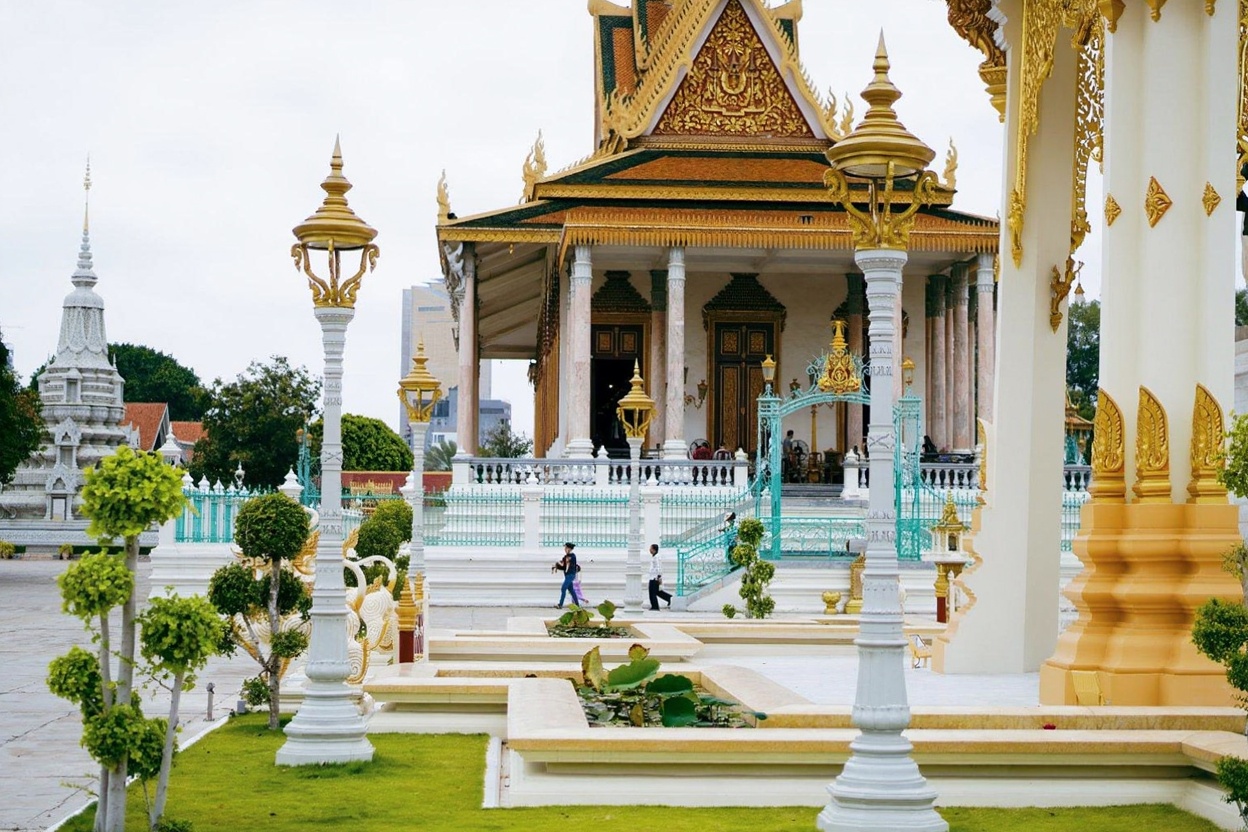
Entry: $10. Open daily 7:30–11am and 2–5pm. The midday closure — 1pm to 2pm, sometimes stretching to 2:30pm — catches visitors out regularly. Turn up at 1:15pm and you’ll be told to come back.
The Silver Pagoda (Wat Preah Keo Morakat) is inside the complex and included in the entry fee — it’s named for its floor of 5,000 silver tiles and contains a 17th-century Khmer Baccarat crystal Buddha. Dress code: shoulders and knees covered, no exceptions. Sarongs available to borrow at the entrance.
GPS: 11.5626° N, 104.9305° E. Located on the riverfront — Sisowath Quay.
•JAMES’S PICK
Go at 7:30am when it opens. The grounds are cooler, the light is better for photographs, and the tour groups haven’t arrived. By 9am it’s significantly busier. The Silver Pagoda inside has a specific quality of cool silence in the early morning that disappears once fifty people are in it simultaneously.
National Museum of Cambodia
Next door to the Royal Palace — a ten-minute walk along the riverfront. Entry: $10. Open 8am–5pm daily.
The best collection of Khmer art outside Angkor — bronze statues, stone carvings, and ceremonial objects spanning the 4th–13th centuries. The building itself, a traditional Khmer-style structure in terracotta red, is worth seeing from the outside even if you’re skipping the entry fee.
Budget 1–1.5 hours inside. If you’ve done Angkor, the museum provides context for what you saw at the temples — the provenance of specific pieces and the scale of the Khmer Empire’s artistic output. If you haven’t been to Angkor yet, the museum is a useful primer.
Sisowath Quay: The Riverfront
The promenade along the Mekong — 1–2km of restaurants, bars, and market stalls facing the river. At sunset, the light on the water and the activity of the riverside make this the most atmospheric hour in Phnom Penh.
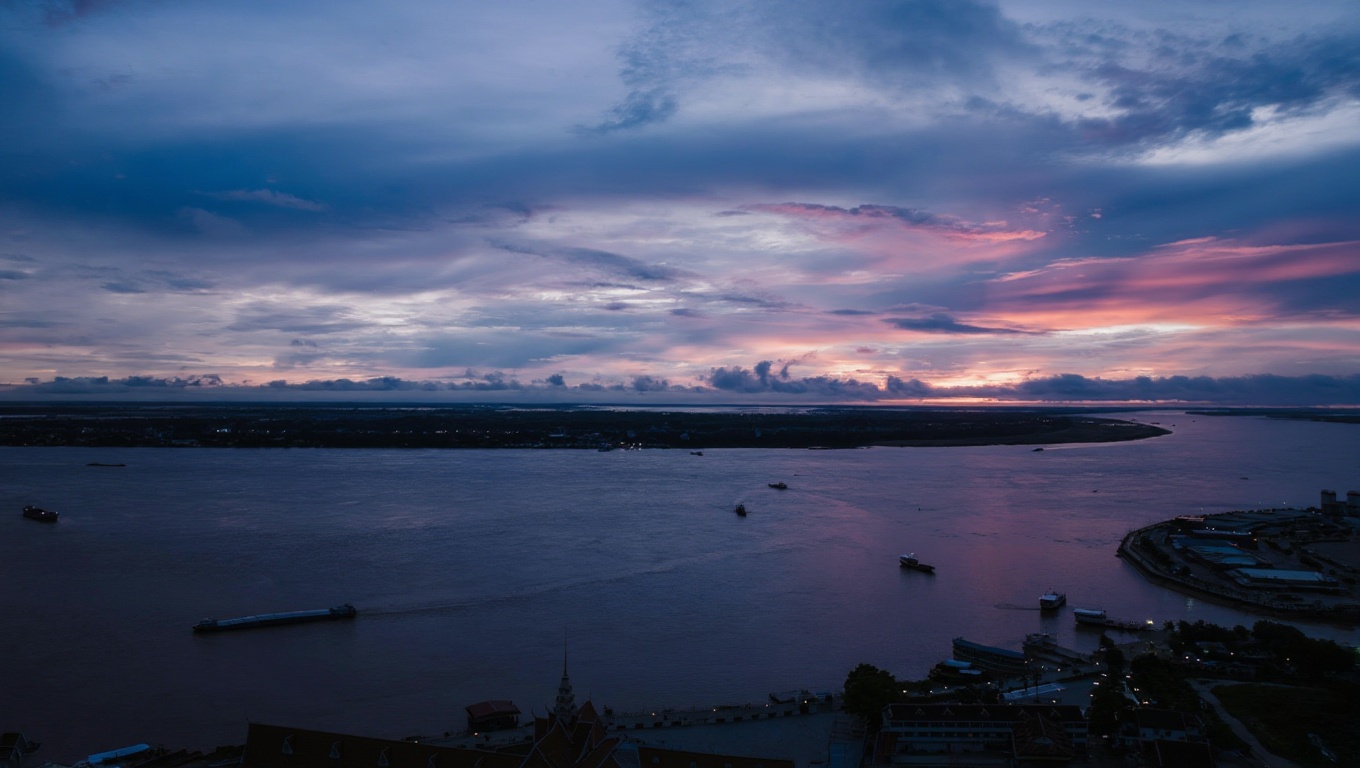
The warning: keep an eye on your belongings. Bag snatches from motorbikes are occasional but real along the waterfront — wear your bag in front or keep it on the table side away from the road. Not constant, not paranoia-inducing, but worth knowing.
Happy hour at most riverfront bars runs 5–7pm. A draft Angkor beer costs around $1–1.50 (~£0.80–1.20) at the quieter spots back from the quay; the tourist-facing bars on Sisowath Quay charge $2–3. The sunset is the same from both.
Markets: Central, Russian, and Night
Phnom Penh has three markets worth your time. Different purpose, different atmosphere.
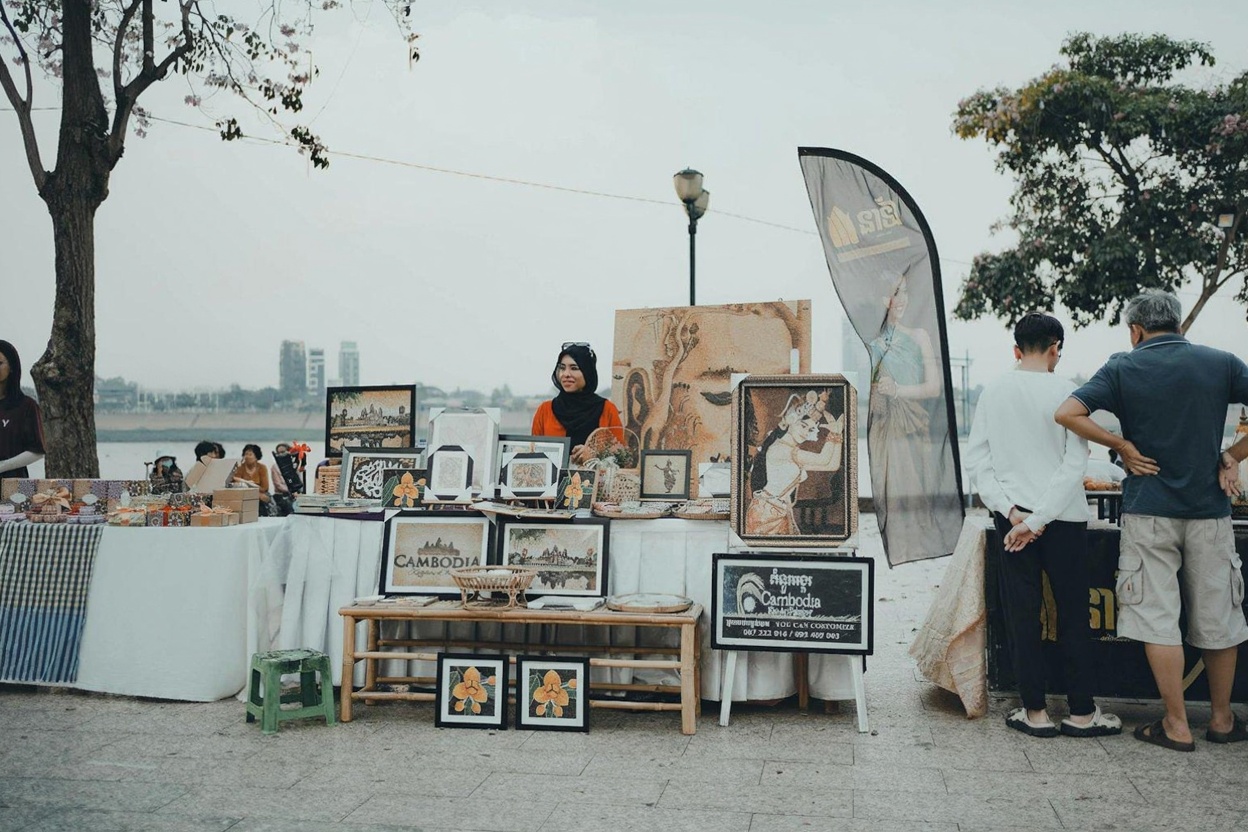
Central Market / Psar Thmei (say: PSAR t’MAY): The Art Deco dome in the centre of town — built in 1937, still functioning as a market. Jewellery, clothes, electronics, and food stalls. Good for watching the city operate rather than for buying anything specific. Free to enter, open from dawn.
Russian Market / Psar Tuol Tom Pong: The market expats and long-term visitors actually shop at. Secondhand clothes, bootleg goods, handicrafts, and street food. The fabric and clothing sections have better quality and lower prices than the tourist-facing stalls in the Central Market. The food section inside is one of the cheapest places for a sit-down lunch in Phnom Penh — $2–3 (~£1.60–2.40) for noodle soup or lok lak. Tuk-tuk from the Royal Palace area: $3–4.
Phnom Penh Night Market: Along the riverfront, open from around 4pm. Clothes, food, crafts, and live music. Less pressure from vendors than most Southeast Asian night markets. Best visited at sunset — go at 5pm during happy hour, eat something, walk around. Not the place for serious purchasing; very much the place for an easy evening with minimal effort.
Where to Eat in Phnom Penh
Phnom Penh has a better food scene than most Cambodia guides acknowledge, and most of it is cheap.
Fish amok (say: ah-MOK — coconut milk curry steamed in a banana leaf, fish version): the dish you came for. At a proper Khmer restaurant — Romdeng on Street 174, Malis on Norodom Boulevard, or similar — it costs $7–12 (~£5.50–9.50) and has been made by someone who learned from their grandmother. At a tourist restaurant on Sisowath Quay, it costs $10–14 and doesn’t taste the same. The difference is identifiable.
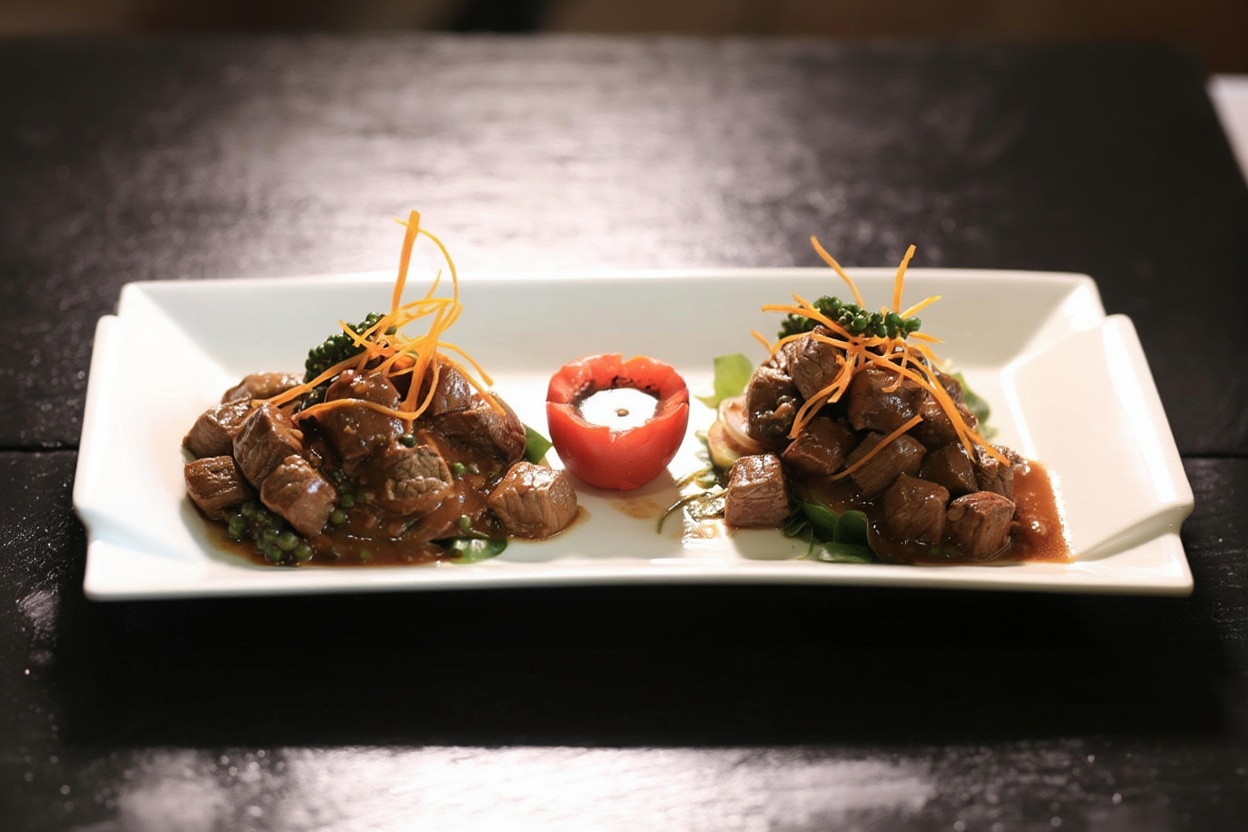
Lok lak (say: lok-LAK — stir-fried beef with lime-pepper dipping sauce and a fried egg on rice): the everyday Phnom Penh lunch. Any local restaurant, $3–5. Order the beef, not the chicken.
Street breakfast: Sopheak’s noodle cart on Street 308 — or any cart like it — costs 4,000 riel (~$1) for a bowl of rice porridge or noodle soup with bean sprouts and chilies. This is the actual breakfast situation in Phnom Penh. Hostel breakfast is fine; the cart on the corner is the real thing.
Budget reality: A full day of eating well in Phnom Penh — street breakfast, proper sit-down lunch, a mid-range dinner — runs $10–18. A beer with it adds $1–2. The food in Phnom Penh is the best argument for spending an extra night.
For more on Cambodian food and what to order: the Cambodia guide covers the food safety and street food situation.
Getting Around Phnom Penh
Tuk-tuk (say: took-took — motorised rickshaw with a canopied trailer) is the standard tourist transport. Around $2–4 for a short trip inside the city; negotiate before you get in. For a full day of sightseeing — Royal Palace, National Museum, markets — expect to pay $15/day for a tuk-tuk driver who waits between stops. Worth it for the heat management alone.
Grab (the Southeast Asian equivalent of Uber) runs in Phnom Penh and is generally cheaper than tuk-tuk negotiation — download the app before you arrive. A tuk-tuk from the app is typically $2–4 for central routes.
For the Killing Fields specifically: arrange round-trip transport through your hotel ($17 is the standard rate) or book a tuk-tuk in the morning that includes the wait while you’re inside. Grab tuk-tuks sometimes decline the longer trip; a hotel-arranged driver is more reliable.
Practical Tips That Save You Time
A few things that fall through the gap between the attraction-by-attraction guides and the actual trip.
Heat management: Phnom Penh’s heat is not a minor consideration — it’s 32–38°C for much of the year, and the humidity makes it feel worse. Do the outdoor sites (Killing Fields, Royal Palace grounds, markets) in the morning before 11am or after 4pm. Keep the middle of the day for the National Museum, air-conditioned restaurants, or your hotel. If you’re doing back-to-back outdoor sites in April, you will be exhausted by noon. This is not weakness. It’s arithmetic.
Cash and ATMs: Cambodia runs primarily on US dollars for tourist transactions — your hotel, tuk-tuks, most restaurants, and all attraction entry fees quote in USD. Riel is used for small amounts (change under $1 is often given in riel at 4,000 KHR per dollar). ATMs are widely available in BKK1 and the riverfront area; most charge a $4–5 withdrawal fee on top of your bank’s fees. Withdraw a meaningful amount once rather than hitting the ATM daily. Most guesthouses, mid-range restaurants, and larger shops accept card; street food and tuk-tuks are cash only.
Tuk-tuk pricing: Agree the price before you get in. The opening ask from a tuk-tuk driver waiting outside the Royal Palace or Tuol Sleng will be higher than what you should pay — counter-offer and settle. Around $2–3 for short in-city hops, $4–6 for cross-city trips, $12–18 for a full-day driver who waits between stops. Don’t haggle $1 off a $3 tuk-tuk. Pay what’s fair and move on.
Visa on arrival: Most nationalities can get a 30-day tourist e-visa in advance at evisa.gov.kh ($36) or visa on arrival at Phnom Penh airport ($30 cash, USD only). The e-visa is cleaner — one less queue on arrival. Extend once inside Cambodia for $45 at any immigration office in the city.
The Confession: What I Got Wrong the First Week
I turned up at the Royal Palace at 1:15pm on a Tuesday. Confident, guidebook-free, feeling like someone who had done enough research.
The gates were locked. A sign said: Open from 2pm.
I sat in 38°C heat on the riverfront for 45 minutes, got comprehensively sunburned, and then went back at 2pm and spent an excellent hour and a half inside.
The Royal Palace closes from 1pm to 2pm. Most guides mention this and most visitors don’t internalise it until they’re standing at a locked gate in the midday Phnom Penh sun. Visit in the morning. Or visit at 2pm. Just not between 1pm and 2pm — that’s mine and my particular shade of pink skin’s lesson for you.
Where to Stay in Phnom Penh
Phnom Penh has a genuine range of accommodation — from $6 hostel dorms to boutique hotels at $80–120/night. The BKK1 district (Boeung Keng Kang) is where most expats and mid-range travellers base themselves — walkable, plenty of restaurants, central without being tourist-trap central.
The BKK1 district is the right base. Street 308, 278, and 57 have the best concentration of restaurants, cafés, and mid-range guesthouses. It’s a tuk-tuk ride from everything rather than walking distance from everything, which is fine — you’ll be taking tuk-tuks regardless of where you stay.
For the full Cambodia budget breakdown: Cambodia Budget Per Day.
FAQ: Phnom Penh Travel Guide
- How many days should I spend in Phnom Penh?
- Two full days minimum — one for the Killing Fields and Tuol Sleng, one for the Royal Palace, National Museum, and markets. Three days if you want a day trip or slower pace. One day is not enough; you’ll rush the historical sites or skip them, and both options are worse than taking the extra night.
- Is the Killing Fields visit worth it?
- Yes, and worth is not quite the right word. Choeung Ek is one of the most significant historical sites in Southeast Asia — the memorial to nearly 2 million people who died under the Khmer Rouge between 1975–1979. The audio guide is excellent, the $6 entry is among the cheapest for anything this significant, and visiting gives Cambodian history a weight that the temples at Angkor don’t carry on their own. Go.
- Is Phnom Penh safe for tourists?
- Generally yes — it’s significantly safer than its reputation suggests. The main risks are bag snatching from motorbikes (keep bags in front on the riverfront) and tuk-tuk overcharging (agree the price before you get in). Petty theft is occasional, violence against tourists is rare. Night-time in the Riverside and BKK1 areas is fine. For the full picture: Is Cambodia Safe?
- What is the best time to visit Phnom Penh?
- November to March — the dry season, cooler (25–32°C), no flooding. April and May are the hottest months (35–38°C) and not recommended for outdoor sightseeing. The wet season (June–October) brings heavy afternoon rain but lower prices and fewer tourists. The historical sites are accessible year-round; outdoor market visits are uncomfortable in the heat of April.
- How much does Phnom Penh cost per day?
- Budget travellers using hostels, street food, and tuk-tuks can manage $15–25/day. Mid-range — private hotel room, sit-down meals at proper restaurants, a couple of attractions — runs $50–80/day. The main costs are accommodation and tuk-tuks; food and entry fees are cheap. Peak season (November–April) runs about 20% higher on accommodation.
- Is Phnom Penh worth visiting if I’m mainly here for Angkor Wat?
- Yes — spend two days in Phnom Penh before or after Siem Reap. Most Cambodia itineraries go Phnom Penh → Siem Reap or reverse. The Killing Fields and Tuol Sleng give the Angkor temples a historical context that makes the whole trip more coherent. Phnom Penh is where Cambodia’s 20th century happened; Siem Reap is where its 12th century happened. You need both. See the Siem Reap guide for the Angkor side of the trip.
Day Trips from Phnom Penh
Phnom Penh is a solid base for a handful of day trips that most two-day itineraries don’t have room for but a three-day stay does. Here’s what’s genuinely worth the half-day:
Oudong — the former Khmer capital (40km north, 1.5 hours by car or tuk-tuk): Oudong was Cambodia’s capital from the 15th century until 1866, when Phnom Penh took over. The hilltop site has three large stupas containing the remains of Cambodian kings, monastery buildings, and views over the surrounding rice paddies and the Mekong. It’s not a major site — an hour is plenty — but the combination of historical significance and the near-total absence of other tourists makes it one of the more peaceful mornings near the capital. Tuk-tuk from Phnom Penh: $25–35 return including wait time. Most guesthouses can arrange this.
Koh Dach (Silk Island) — 10km north of Phnom Penh on the Mekong: A riverine island accessible by ferry ($0.50 from the Phnom Penh ferry terminal) that continues traditional silk-weaving practices that have largely disappeared elsewhere in Cambodia. Families operate hand looms in open-fronted houses — you can watch the process, buy silk scarves directly ($15–30 for quality weaving), and cycle around the island. The island has a pleasant village pace that’s completely different from the capital 10km away. Bicycle hire on the island: $2/day. Half a day, genuinely distinctive.
Phnom Chisor — ancient temple, 55km south: A 10th-century temple on a hilltop with panoramic views over the surrounding rice plains. Less visited than Angkor, no entry fee crowds, accessible by tuk-tuk in about 1.5 hours. The 400+ stone steps to the top are strenuous in the heat — go before 9am. Entry: small donation at the temple. The view from the top, and the fact that you’ll have it largely to yourself, is the point.
Tonle Bati — 35km south, combines with Phnom Chisor: A 12th-century Angkorian temple complex and a lake with picnic facilities that Cambodian families use at weekends. The temples are genuinely Angkorian-era and worth 30 minutes. The lake is a local recreation spot rather than a tourist attraction — the kind of place where Phnom Penh families come for weekend fish lunches and hammock time. Good for understanding what Cambodians do on a day off rather than another temples circuit. Entry: small donation.
Practical note on all Phnom Penh day trips: None of these are accessible by public bus in a useful way. Hire a tuk-tuk for the day ($25–40 depending on distance) or arrange a car with a driver through your guesthouse ($50–70). Agree the full itinerary before departure — combining Oudong and Koh Dach in one day doesn’t work geographically (they’re in opposite directions), but Phnom Chisor and Tonle Bati are on the same road south and combine into a comfortable half-day starting at 7am.
Before You Leave Phnom Penh
Phnom Penh is harder to visit than Siem Reap and more important. The Killing Fields and Tuol Sleng don’t make for easy mornings, and that’s the point — Cambodia’s history is not a backdrop for a temple holiday. It’s the reason the country looks the way it does.
Two days, done properly: the historical sites first, the palace and the river second, fish amok somewhere that makes it correctly. That’s the trip. Questions in the comments — I check them most days, and I’ve been here four years, so the chances are reasonable I know the answer.