
Last updated: June 2026 — prices and opening times verified June 2026.
The most common Angkor question is about tickets. The second most common is “I bought mine online and paid $91 for a three-day pass — was that normal?”
It was not normal. It was €29 more than it needed to be.
I’ve been in Phnom Penh for four years. In that time I’ve taken roughly twenty people through the Angkor temple complex — friends visiting from Manchester, colleagues doing a week in Cambodia, a family group who planned the whole thing via a Klook app without asking me first. The ticketing mistake happens reliably. This is how to avoid it.
The Official Angkor Ticket Prices for 2026
There is one ticket office. One set of prices. One valid source.
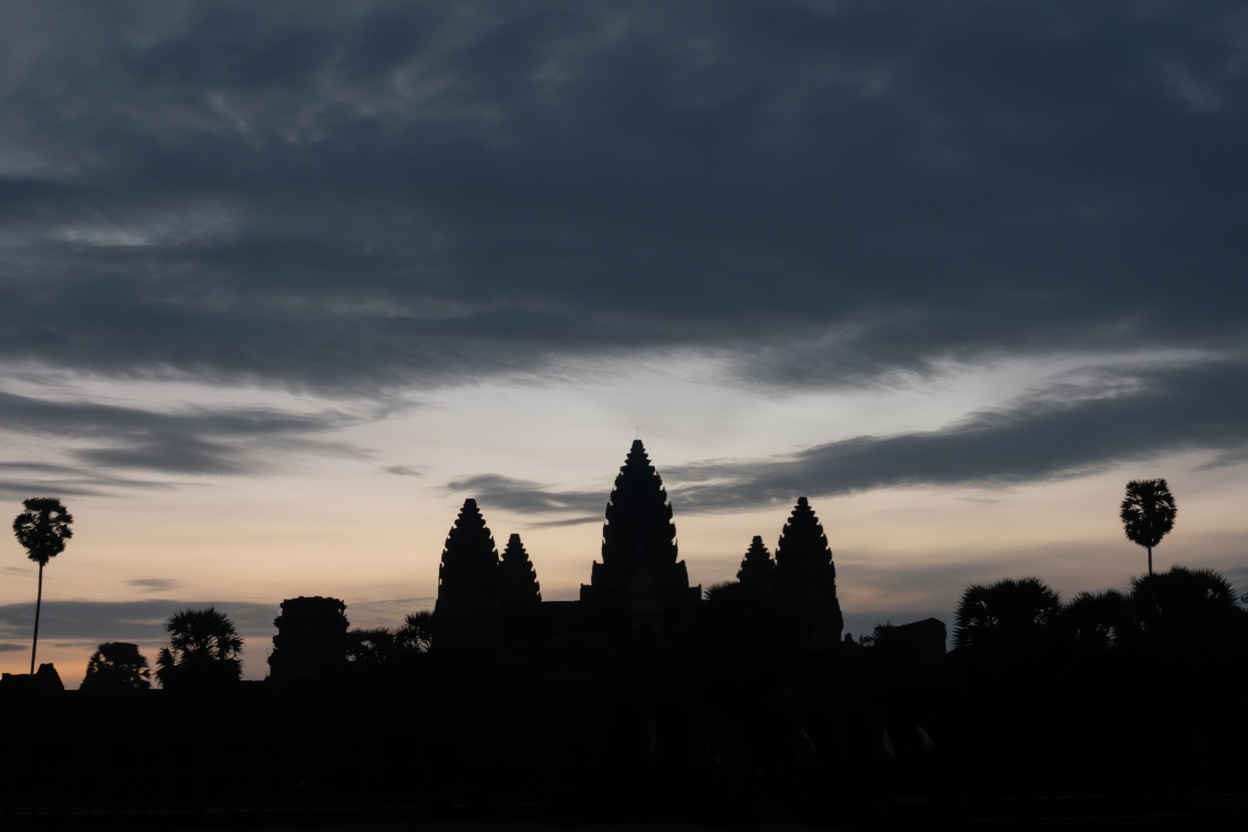
The Angkor Enterprise is the government body that manages all Angkor Archaeological Park ticket sales. Their office sits on Road 60, approximately 5km from the centre of Siem Reap, about halfway between town and the main temple entrance. The ticket office opens at 5:00am and closes at 5:30pm.
Children under 12 enter free. Bring their passport — they will check.
Why Online Tickets Cost So Much More
The online price difference is not a convenience fee. It is pure markup — either from the Angkor Enterprise’s own online portal (which for reasons that have never been satisfactorily explained charges more than the in-person rate) or from third-party booking platforms that layer their commission on top.
The official Angkor Enterprise website sells 1-day passes for $59. Klook, GetYourGuide, and similar platforms sell them for similar or higher amounts. The identical pass bought at the Road 60 counter costs $37.
The math: if you’re doing three days at Angkor, you save $29 by buying in person versus buying online. That’s three solid meals at a Siem Reap restaurant, or two nights in a decent guesthouse.
⚠Real Talk
The Angkor Enterprise website and various booking platforms actively advertise online tickets as the convenient option. They are not wrong — it is convenient. But convenience costs $22–$33 extra per pass. If you’re in Siem Reap anyway, the ticket office is on the route from town to the temples. Stop there first.
How to Get to the Ticket Office
The Angkor Enterprise ticket office is on Road 60, which runs between Siem Reap town and the main Angkor temple complex. It is not a detour — your tuk-tuk driver will pass it on the way to the temples anyway.
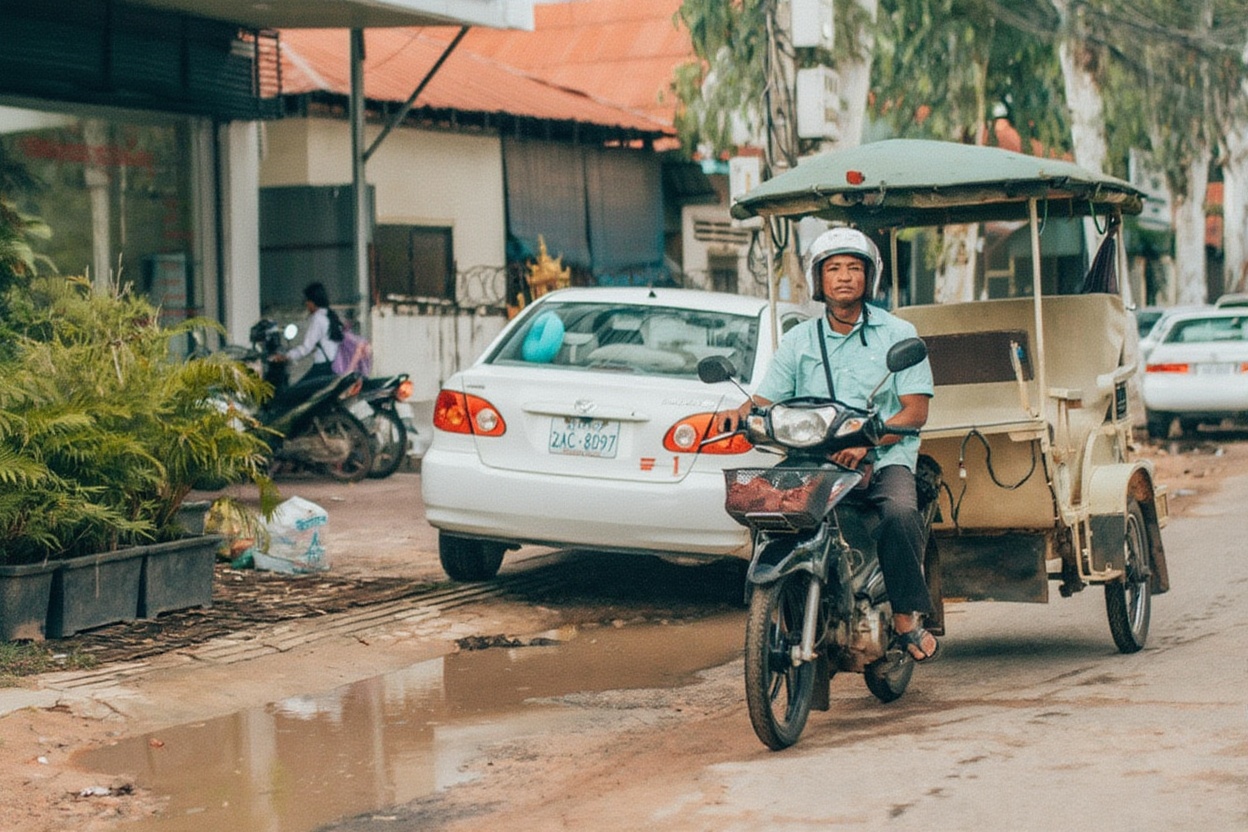
Practical approach: tell your tuk-tuk driver “Angkor Enterprise ticket office first, then temples.” Any driver who regularly does Angkor runs will know exactly where to go. If they try to take you directly to the temples first, they’re either confused or hoping you’ll buy a ticket from someone near the entrance — which doesn’t work. Only the Angkor Enterprise issues valid passes.
By tuk-tuk from central Siem Reap: 15–20 minutes. A standard tuk-tuk day hire including Angkor runs costs around $15–20 for the full day, driver waiting.
The office typically gets busy between 5:00am and 6:00am — that’s when everyone queuing for sunrise at Angkor Wat arrives. If sunrise is your plan, either get there before 5am or accept a short queue. After 7am it’s significantly quieter.
Which Pass Should You Buy?
This is where most guides get it wrong by recommending the one-day pass for “casual visitors.” The math doesn’t support it.
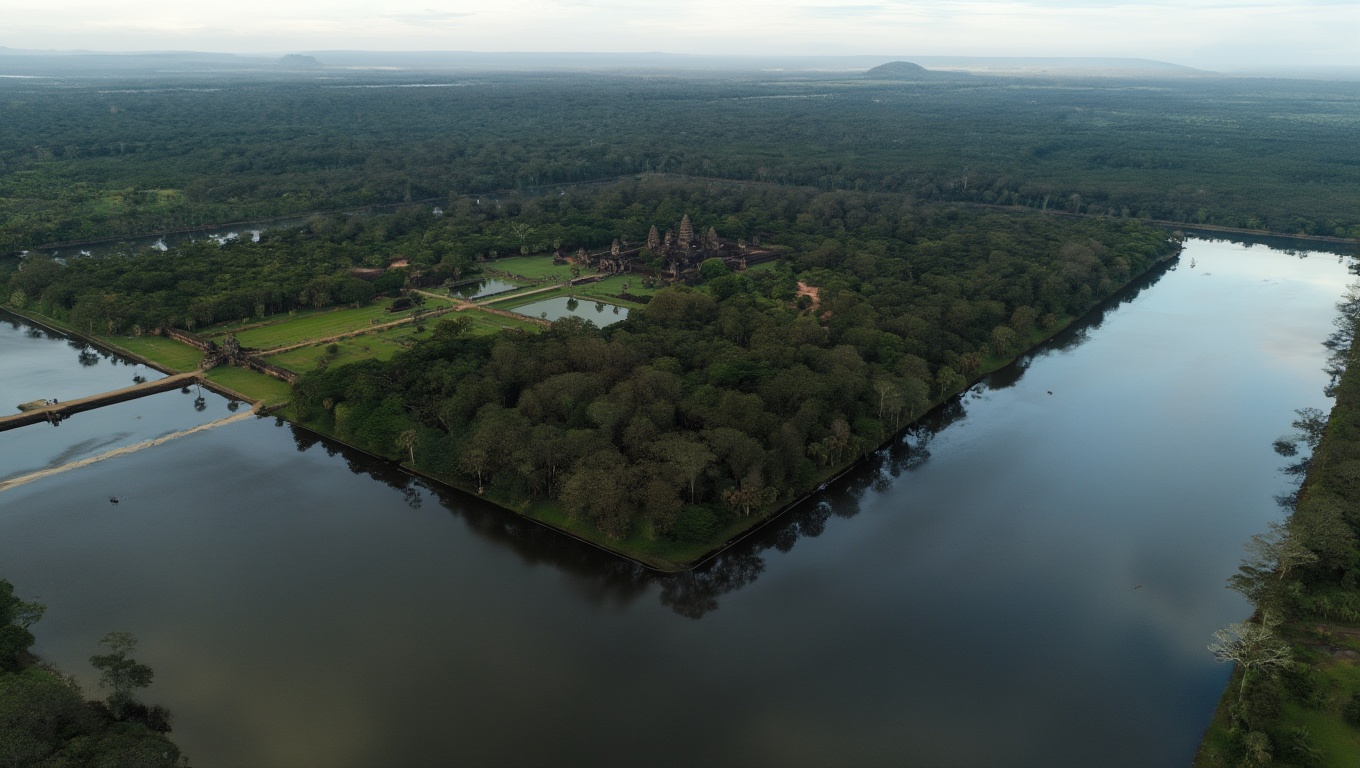
One-day pass ($37): Only right if you genuinely have one day in Siem Reap and no flexibility. You can see Angkor Wat, Angkor Thom, and Ta Prohm in one long day if you’re efficient. You will be tired, you will have rushed it, and you will have missed the dozen other temples that are actually worth your time.
Three-day pass ($62): The right choice for most visitors with a flexible itinerary. Valid for any three days within a ten-day window — which means you don’t have to do three consecutive days. Use one morning for the Angkor Wat sunrise, a full second day for Angkor Thom and the Bayon, a third for the outer temples (Preah Khan, Neak Pean, Banteay Srei). You’ll still have days off in between to recover from the heat.
Seven-day pass ($72): Worth it only if you’re staying at least two weeks in Siem Reap or plan to come back to the temples from elsewhere. The pass is valid for any seven days within a month. At $10 per additional day beyond the three-day rate, it’s good value if you’ll use it.
•JAMES’S PICK
The three-day pass is the right call for anyone staying four or more nights in Siem Reap. You don’t have to use the days consecutively — spread them across your stay, rest in between, and see the temples properly rather than rushing through them dehydrated.
My Mistake (So You Don’t Repeat It)
My first visit to Angkor, four years ago, I bought a one-day pass because I thought I’d seen enough photos to know what I was getting into.
I hadn’t. By 2pm I was standing in front of Ta Prohm — the “Tomb Raider temple” with the tree roots growing through the walls — thinking: “I need another day here.” I hadn’t even been to Banteay Srei. I hadn’t done the Bayon properly. I’d rushed the Angkor Wat inner galleries to make time.
I came back the next day and bought a three-day pass. Which cost me $37 + $62 = $99 instead of $62 if I’d bought the three-day pass first. I don’t make that mistake when I take people now.
What’s Actually Included in the Angkor Pass
The Angkor Archaeological Park covers a large area — over 400 square kilometres — with hundreds of temple sites, though the main circuit covers perhaps twenty. Your pass covers all of them.
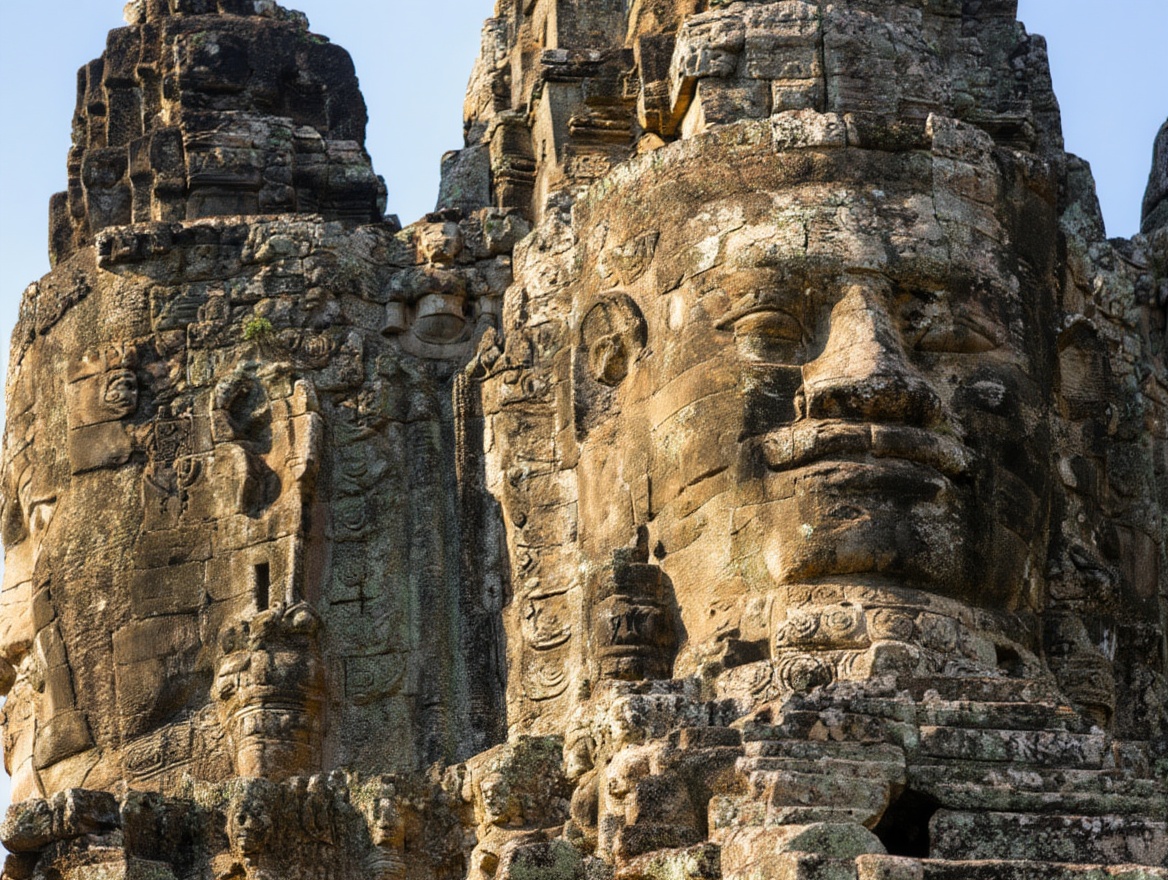
The main temples included:
Angkor Wat — the largest religious monument in the world, more impressive in person than in any photograph. Plan two to three hours minimum. Sunrise here means arriving in the dark and waiting — the reflection pool shot everyone knows comes from the northwest corner.
Angkor Thom + The Bayon — Angkor Thom is the ancient city that surrounds the Bayon temple. The Bayon’s 54 towers with their 216 stone faces are genuinely one of the most disorienting buildings I’ve stood in. You walk around and every direction is a face. Budget two hours here minimum.
Ta Prohm — the temple where the jungle is winning. Strangler fig roots have grown through and around the stonework over centuries. It’s crowded, it’s popular for good reason, and the best access is via the eastern entrance to avoid the main tourist flow.
Preah Khan — a larger, less-visited complex that rewards an early morning visit when the crowds haven’t reached it yet.
Banteay Srei — 25km from the main complex, requires a separate tuk-tuk run, but the pink sandstone carvings are finer than anything in the main area. Worth a half-day.
Practical Tips for the Ticket Office Visit
A few things that will make the process smoother:
Bring your passport. You’ll have your photo taken at the ticket office — this goes on your pass, which gets scanned at every temple entrance. No passport, no ticket.
Cash or card accepted. The ticket office accepts USD cash and major credit cards. USD is the de facto currency in Cambodia — everything at Angkor is priced in dollars.
Don’t buy tickets near the temple entrances. There are no legitimate ticket sellers near the temple gates. Anyone offering to sell you a pass outside the official ticket office is either confused or running a scam. The gates have scanners. Unofficial passes don’t scan.
If you buy after the day’s cutoff, it counts from the next day. The pass activates from the purchase date during daytime hours. If you buy at 4pm, you can use your first day at sunrise the following morning.
ℹKnow Before You Go
The heat at Angkor is serious. Between 10am and 3pm in the dry season (November–March), temperatures regularly hit 35°C in direct sun. Start early, finish the main temples before midday, rest during the heat of the day, return in the late afternoon. Angkor Wat faces west — the light at 4–5pm is better than sunrise for most photographs.
Siem Reap Transport to Get There
Most visitors hire a tuk-tuk driver for the full day. The standard rate for a tuk-tuk day at Angkor is $15–20 (~62,000–83,000 KHR), driver waiting. This covers the ticket office run plus the main temple circuit. Agree the price before you leave — reputable drivers will quote it upfront.
Electric bikes and regular bicycles can also be hired in Siem Reap and ridden to the temples. The cycling distance from town to the main Angkor Wat entrance is about 7km. In the cool season (November–February), this is genuinely pleasant. In April or May, reconsider.
For Banteay Srei, which is 25km away, you need the tuk-tuk. No bike makes that round trip in Cambodian heat without consequences.
Is Angkor Wat Worth It?
Yes. Unreservedly.
I have visited Angkor Wat enough times to have taken visitors who arrived sceptical and left converts. The scale of the complex — not just Angkor Wat itself but the full archaeological park — is unlike anything in Europe or the Americas. These were built in the 12th century. They are in remarkable condition. The Bayon’s faces are extraordinary. Ta Prohm is one of the most atmospheric ruins I’ve stood in.
The temple fatigue is real if you try to do everything in one day. Don’t. Spread it across two or three days. Take a morning off. Swim at your guesthouse pool. Come back in the late afternoon when the light is good and the crowds thin. This is the Angkor that stays with you.
Frequently Asked Questions: Angkor Wat Tickets
- What happens if I lose my Angkor pass?
- The pass has your photograph printed on it and is tied to your passport number in the Angkor Enterprise system. If you lose it, go back to the ticket office with your passport — they can verify your purchase and reissue a pass. This takes 20–30 minutes and there may be an administrative fee ($5–10, not officially stated but sometimes requested). Keep a photo of your pass on your phone as a backup reference, though the physical pass is required for entry.
- Can I visit Angkor Wat before buying a ticket?
- No. The main road from Siem Reap to Angkor Wat passes through a checkpoint at the ticket office on Road 60 — you cannot reach the temple without your pass being scanned. Tuk-tuks and private drivers know this; any driver who takes you directly toward the temples without stopping at the ticket office first is confused or trying to skip the queue (it doesn’t work — the gate scanners will stop you). Buy the pass, then proceed to the temples.
- Are there discounts on Angkor passes?
- Children under 12 enter free with passport. There are no other official discounts — no student discount, no senior discount, no Cambodia resident rate. The $37/$62/$72 prices are fixed. Anyone offering you a discounted pass is selling you either a counterfeit or overcharging you for a regular pass with their markup included. Buy at the ticket office.
- Can I share an Angkor pass with someone else?
- No. Your photograph is taken at the ticket office and printed on your pass. Every temple entrance scans the pass and checks the photo. Passes are non-transferable. Each person in your group needs their own pass — children under 12 are the only exception.
- Does the Angkor pass cover Beng Mealea and Koh Ker?
- No. Beng Mealea (65km east of Siem Reap) has its own separate entry fee of approximately $5, paid at the site. Koh Ker (120km north) also has a separate fee of $10. Neither is covered by the Angkor Archaeological Park pass. Both are worth visiting on longer stays — but budget the additional entry separately. Banteay Srei (35km northeast) is covered by the Angkor pass.
- What are the opening hours at Angkor?
- The ticket office opens at 5:00am (specifically to serve sunrise visitors at Angkor Wat) and closes at 5:30pm. The temples themselves open at 5:00am and close at 5:30pm. Most temples have their main visitor hours from sunrise to sunset, but entering after 5pm on any day does not consume a day on your pass — useful for an evening walk around the Angkor Wat moat without using up one of your pass days.
The Best Way to Plan Your Angkor Days
Angkor rewards sequencing. Here’s the order I’d recommend for a three-day pass:
Day 1 — The Main Event: Sunrise at Angkor Wat (5:15am start, northwest corner of the reflection pool). Spend two hours inside the temple — the inner gallery, the bas-relief panels, the upper sanctuary. Move to Ta Prohm by 8:30am before the tour groups arrive from 9am. Rest during the midday heat. Return to Angkor Thom and the Bayon in late afternoon (3–5pm) when the stone faces catch the golden light.
Day 2 — The Deeper Circuit: Preah Khan in the morning (less crowded than Ta Prohm, comparable atmosphere). Banteay Srei in the afternoon — leave by tuk-tuk at 1pm for the 38km drive, arrive when the worst of the heat has passed. The pink sandstone carvings in the late afternoon light are the best photographic moment in the whole complex.
Day 3 — What You Missed: Use it for whatever called to you on days one and two. The Baphuon inside Angkor Thom deserves a proper visit most people don’t give it. The Terrace of the Elephants on a quiet morning. Or go back to Angkor Wat at 4pm for the west-facing light that sunrise visitors miss entirely — the towers catch the afternoon sun in a way that photographers consistently rate above the sunrise version.
How much are Angkor Wat tickets in 2026?
The official in-person prices at the Angkor Enterprise ticket office on Road 60 are: $37 for one day, $62 for three days (valid any 3 days within 10), and $72 for seven days (valid any 7 days within 30). Children under 12 enter free with passport. Online prices are significantly higher — $59, $91, and $105 respectively. Buy in person.
Where do you buy Angkor Wat tickets?
The only place to buy valid Angkor passes is the Angkor Enterprise ticket office on Road 60, approximately 5km from central Siem Reap and directly on the route to the temples. The office opens at 5am and closes at 5:30pm. Any other seller — online, near the temple gates, through tour operators — is selling the same pass at a significant markup or, in some cases, not selling valid tickets at all.
Is a 1-day or 3-day Angkor pass better?
Three-day pass for almost everyone. At $62 vs $37, the extra $25 gives you two additional days — and the Angkor complex genuinely needs three days to do properly. One day is enough for Angkor Wat, Angkor Thom, and Ta Prohm if you rush. Three days lets you do those well, adds the outer temples (Preah Khan, Banteay Srei), and gives you time to rest between sessions in the heat.
Can you buy Angkor Wat tickets online?
Yes — both through the official Angkor Enterprise website and through third-party platforms like Klook and GetYourGuide. The official in-person 1-day pass costs $37. The online version costs $59. The pass is identical. There is no practical benefit to buying online unless you cannot get to the ticket office before your temple visit, which is essentially impossible given the ticket office is on the way to the temples from Siem Reap.
What is the best time to visit Angkor Wat?
Sunrise is beautiful at Angkor Wat — the reflection pool shot requires the northwest corner, predawn light, and arriving before 5:30am in peak season to get a decent spot. But the best photography light is actually late afternoon (4–5pm) when Angkor Wat faces its best angle in westward sun. The best time for the complex overall is November to March (dry, cooler). Avoid April to June — extreme heat makes midday temple visits brutal.
Are there scams at Angkor Wat?
The main Angkor ticket scam is paying far over the odds through online platforms or agents — not technically fraudulent but expensive. There is no legitimate ticket sales anywhere near the temple gates themselves. Anyone near the entrances offering tickets is either misinformed or running a scam; the gates use QR scanners that only read genuine Angkor Enterprise passes. Buy at the Road 60 office and you’ll have no issues.
