Last updated: June 2026 — seasonal information and prices verified June 2026.
I’ve been based in Phnom Penh for four years. I arrived in August — wet season, monsoon, road flooding in Kampot that trapped me for two days in a guesthouse that was very nice but not where I’d planned to be. I’d also done Angkor in April, which I don’t recommend to anyone who has options. Here’s the full picture.
Cambodia Month by Month: The Quick Reference
Dry Season (November–April): When Most People Go and Why
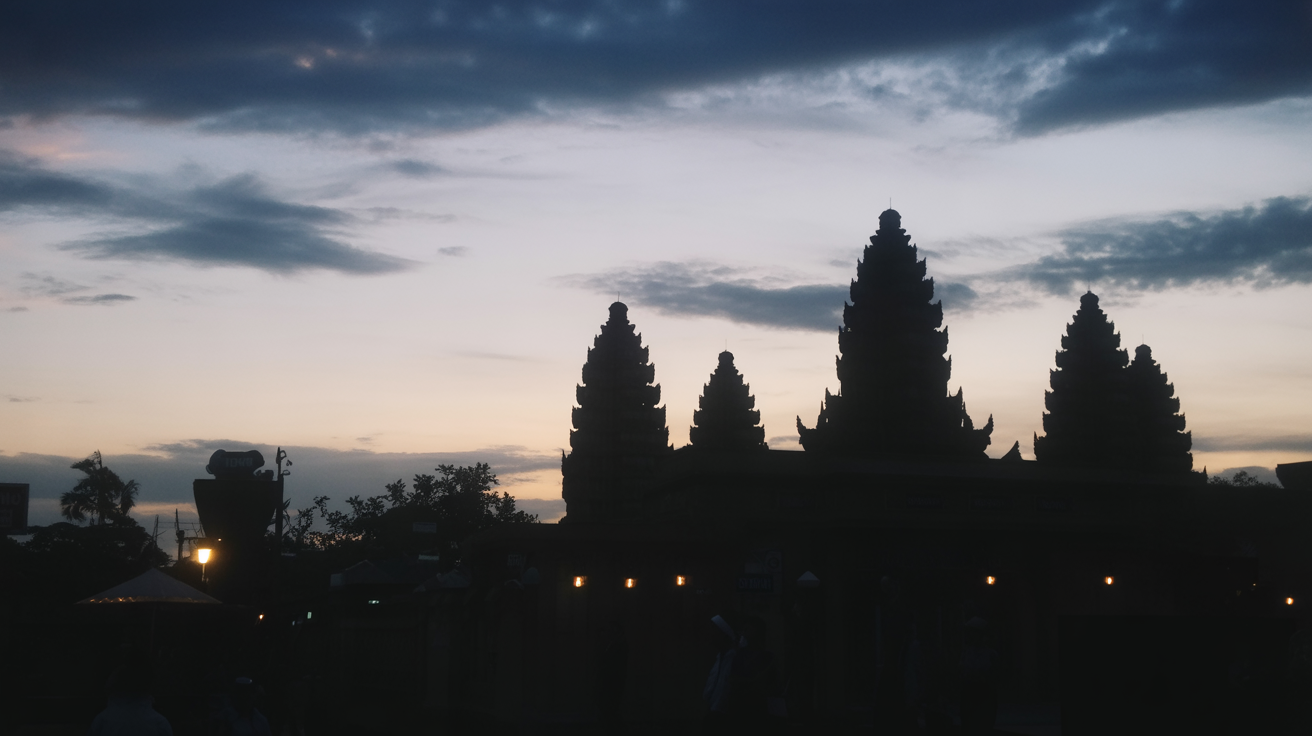
November to February is the sweet spot. The rains have gone. The temperature is manageable — 25–32°C in Siem Reap, slightly warmer in Phnom Penh. The roads to outlying temples and rural areas are passable without 4WD drama. The rivers are calm. The skies are clear enough for Angkor Wat sunrise to deliver what it promises.
November specifically: arriving just as the wet season ends, the landscape is still green from the months of rain, the waterfalls are at full flow, and the tourist crowds haven’t yet built to peak levels. Late October to mid-November is arguably the best value window in the Cambodian travel calendar — just-ended rains, lower prices than peak, good conditions everywhere.
December and January are peak season — the most comfortable temperatures, the most tourists, and prices at their highest. Book Angkor Wat tickets in advance (though they’re not rationed), book popular accommodation 4–6 weeks ahead for Siem Reap especially, and accept that the temples will be shared with everyone else who made the same correct timing decision.
February and March: still dry, getting warmer. February remains excellent. March is fine for the temples if you’re going early. By March, Angkor at midday is genuinely uncomfortable — shade in the gallery sections, plan accordingly.
April: the heat arrives fully. The average temperature hits 35–40°C and occasionally beyond. Khmer New Year falls in mid-April — the country’s most important holiday, involving three days of celebrations, water fights, and a mass movement of Cambodians to their home provinces. The water festival is worth seeing; the heat is not. If April is your only option, go early to every outdoor attraction and plan for air-conditioned afternoons.
Wet Season (May–October): The Honest Case For It
Here’s what they don’t tell you about the wet season: it rains in the afternoon, not all day. Mornings are typically dry and clear. The rain arrives around 2–3pm, hard and fast, and is usually over within an hour or two. If you plan your outdoor activities for the morning and your lunch and rest for the middle of the day, you can travel in wet season Cambodia with minimal disruption.
The advantages are real:
Prices: Hotels in Siem Reap drop 30–50% from their peak-season rates. A mid-range guesthouse that costs $60/night in January costs $30–40 in July. That difference, multiplied across a two-week trip, is a meaningful saving.
Crowds: Angkor Wat in July at 5:30am has a fraction of the visitors it sees in December at the same hour. The temples are more accessible, the photography is easier, and the overall experience is quieter.
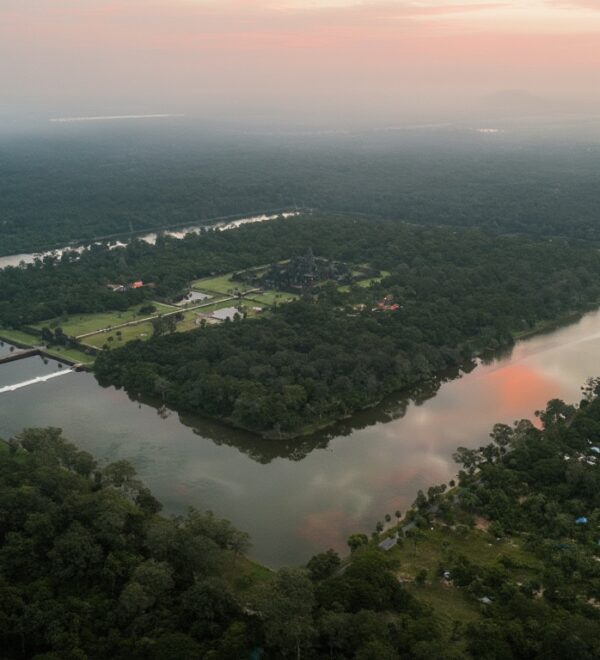
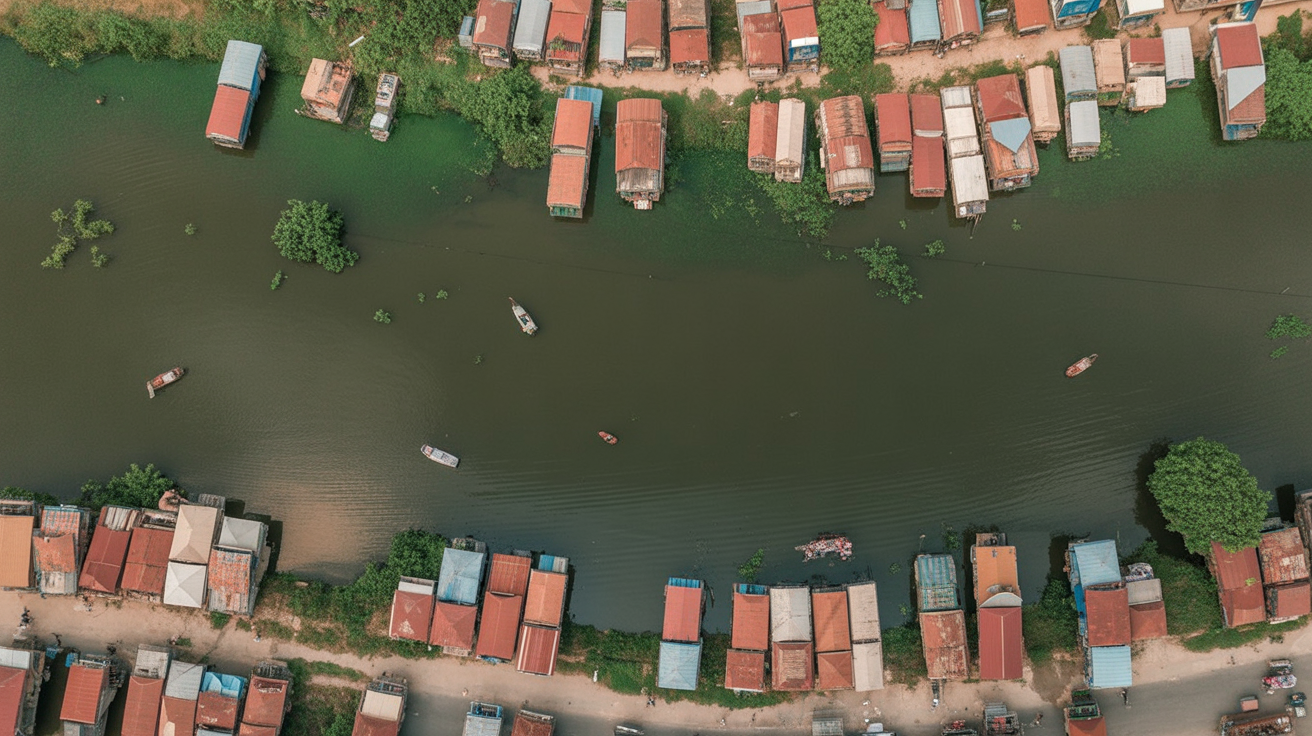
Landscape: Cambodia in the wet season is the version that exists in most historical photographs — the Tonlé Sap Lake floods to five times its dry-season size, the rice paddies are an almost electric green, and the countryside looks like a country that takes rain seriously. If you’re visiting for the landscape as much as the temples, this version is worth experiencing.
The genuine downsides: Some secondary roads in rural areas flood and become impassable. Day trips to remote temples can become complicated. The overnight bus to Kampot from Phnom Penh can be delayed if there’s flooding on the road — this happened to me, adding two days to what should have been a short transit. Check conditions before planning rural itineraries in September and October specifically.
⚠Real Talk
The wet season “it rains all day” reputation is inaccurate. The reality is afternoon showers, clear mornings, and a landscape that rewards the trade-off. June, July, and early August are actually quite good for temple visits — the heat is lower than April, the mornings are reliably dry, and the crowds are half what they are in January. The months to be genuinely cautious about are September and October, when the rain is heaviest and road conditions most unpredictable.
Best Time by What You’re Doing
Angkor Wat and the temples: November to February is best — comfortable temperatures, clear skies for the sunrise reflection pool, and the right light for photography. If you’re going in wet season, June and July are the practical windows — morning weather is reliable, afternoon heat is lower than dry season, crowds are thinner.
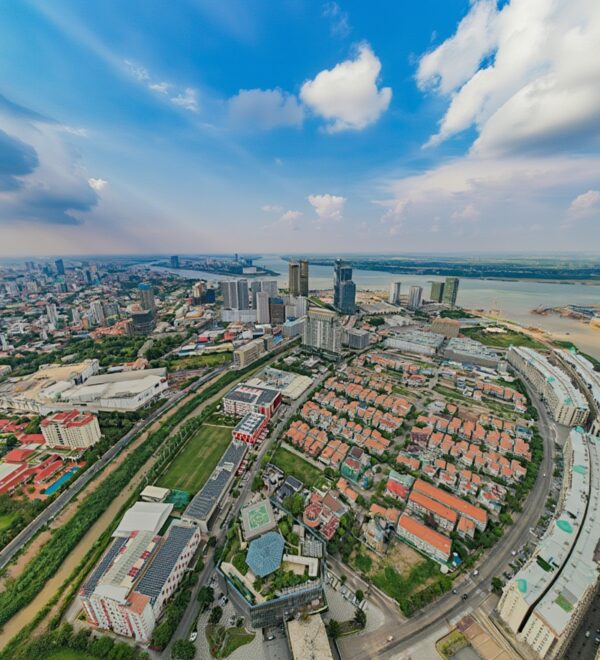
Phnom Penh: Year-round city destination. The historical sites (Tuol Sleng, Killing Fields) are enclosed or outdoor with shade and manageable in any season. Avoid April midday heat for outdoor walking. For the full Phnom Penh guide: Phnom Penh Travel Guide.
Cambodian coast (Koh Rong, Kampot, Kep): November to April — the southwest monsoon brings heavy rain to the coast from May to October, making boat travel to the islands unpredictable and sometimes impossible. The coast is genuinely excellent in December–March, with the islands at their most accessible and the water calmest.
Festivals: Khmer New Year (mid-April) is worth seeing despite the heat — water fights, live music, the whole country celebrating. The Bon Om Touk water festival (October–November, at the turning of the Tonlé Sap River) is one of the largest traditional festivals in Southeast Asia and happens annually in Phnom Penh. Both justify timing a trip around them.
Budget priority: June to September gives the lowest prices and thinnest crowds. The trade-off is afternoon rain and some logistics complexity. If you’re watching costs, the November–December window just as peak season starts offers a reasonable compromise — not yet peak-season pricing, but past the heaviest rains.
Prices by Season: What Changes and by How Much
Accommodation is the main variable. Flights to Cambodia don’t fluctuate dramatically by season in the way European beach destinations do, but hotel prices in Siem Reap specifically show a 30–50% difference between peak season (December–February) and low season (June–September).
A mid-range hotel in Siem Reap: $50–80/night in peak season, $30–50/night in wet season. Budget guesthouses: $20–40 peak, $15–25 wet season. Hostel dorms: $5–10 at any time of year.
Food prices don’t change meaningfully by season — a bowl of Khmer noodle soup from a market stall costs $1–2 regardless of month. Restaurant prices at tourist-facing spots are stable year-round. The only food-related seasonal issue is that some seasonal produce — certain fish from the Tonlé Sap, specific fruits — is only available at specific times of year.
Activity prices are fixed year-round: the Angkor Pass ($37/$62/$72) doesn’t change by season. Tour prices occasionally offer wet season discounts, but these are inconsistent and not something to plan around. For the full Cambodia budget picture: Cambodia Budget Per Day.
Cambodia by Region: Not All of the Country Runs on the Same Schedule
Cambodia’s geography means that different regions have slightly different optimal windows. The country is small — you can drive coast to mountains in a few hours — but the climate varies enough to matter for planning.
Siem Reap and Angkor: November to February is the clearest dry window. The northwest of Cambodia (where Siem Reap sits) catches slightly different weather patterns than the coast — it’s drier in the tourist season and the wet season rains are less extreme than the southwest coast. Angkor is honestly accessible most months if you go early in the morning; the January version is simply more comfortable.
Phnom Penh: Year-round city. The capital is urban, most sightseeing is in museums or sheltered outdoor sites, and the heat is more manageable than at Angkor’s exposed stone temples. The only genuine seasonal issue in Phnom Penh is heavy rain causing some street flooding in September–October, which inconveniences but doesn’t prevent sightseeing.
Kampot and Kep (south coast): The southwest monsoon hits this coast harder than Siem Reap — the wet season (May–October) brings sustained rain rather than just afternoon showers, and some roads between Kampot and the Bokor Mountain National Park can become impassable in September. The coast is at its best November to March: dry, not yet hitting peak heat, and with enough of a breeze off the Gulf of Thailand to make it the most pleasant climate in Cambodia during those months. Kampot pepper harvest happens in May–June, which is a specific reason to time a visit there.
Mondulkiri and Ratanakiri (northeast highlands): The northeastern highlands run slightly cooler than the rest of the country year-round — altitude brings the temperature down by 5–8°C, which matters when the lowlands are hitting 38°C. The wet season brings waterfalls to full power (the Bou Sra Falls in Mondulkiri are spectacular in July–August). Dry season is better for elephant sanctuary visits and trekking. The roads in the northeast are rough regardless of season but become genuinely difficult in heavy rain — hire a local driver who knows which tracks flood.
The islands (Koh Rong, Koh Rong Samloem): November to April only. The southwest monsoon from May to October makes boat crossings from Sihanoukville unpredictable and sometimes cancelled entirely. Boat services run on passenger demand and weather conditions simultaneously — if there aren’t enough passengers and the weather is borderline, the boat doesn’t go. Plan island trips exclusively in the dry season to avoid the logistical uncertainty.
What to Pack: Practical Seasonal Advice
Cambodia’s packing requirements change more by season than most Southeast Asian destinations — not because the climate is extreme in any one direction, but because the wet season implications are specific.
Dry season (November–April): Lightweight clothes, sun protection (hat, SPF 50, a lightweight long-sleeved shirt for temple visits where shoulders must be covered). Comfortable walking shoes — the temple grounds at Angkor involve uneven stone surfaces. A light layer for evening air conditioning in restaurants and guesthouses. Don’t underestimate April heat: hydration packs or large water bottles, electrolyte tablets, a personal fan if you run hot.
Wet season (May–October): Everything above plus a packable rain poncho or umbrella (not optional — the afternoon downpours are significant). Water-resistant sandals or quick-dry shoes. A dry bag or waterproof cover for electronics and documents — tuk-tuks in heavy rain don’t provide much protection. Pack lighter overall so you have room to accommodate a damp towel situation without your bag becoming an issue.
Temple dress code year-round: Shoulders and knees covered at major temples. Lightweight linen or cotton is comfortable in both seasons and covers the dress code requirements. Don’t assume you’ll buy something at the gate — the temple entrance scarves are available but it’s better to have your own. This applies regardless of month.
Medications: Mosquitoes are more active in wet season. A DEET-based repellent (not a natural alternative — actual DEET at 30%+) is standard for wet season Cambodia. Malaria prophylaxis is recommended for rural areas of Mondulkiri and Ratanakiri in the northeast but not generally required for Siem Reap, Phnom Penh, or the coast. Check with a travel health clinic before departure — guidance changes and depends on your specific itinerary.
The Confession: What Happened When I Visited Angkor in April
My first trip to Angkor Wat was in April. I thought that arriving at 5am would solve the heat problem. It didn’t — it delayed it. By 7am the temperature was already 33°C and climbing. By 9am, I’d done the outer gallery, the inner sanctuary, and climbed to the upper level, sweating through my shirt in a way that was making the stewardship of a UNESCO site feel like a personal failing.
By 10am I was at the Bayon, looking at 216 stone faces and thinking mostly about the water bottle I’d left in the tuk-tuk. By noon I was back at the guesthouse, unable to consider leaving until 4pm when the temperature had dropped from “crisis” to “merely unpleasant.”
I saw a lot of Angkor that day. I also retained almost none of it, because the heat was the main character of every memory. If you’re going to Angkor, go in the cool season and give yourself the experience that isn’t a test of heat tolerance. April is survivable. It is not the version you came for.
FAQ: Best Time to Visit Cambodia
- What is the best month to visit Cambodia?
- November, December, and January are the three best months — dry, reliably clear skies, and comfortable temperatures of 25–32°C across the whole country. November is particularly good: just past the wet season, the landscape is still green and the waterfalls are at full flow, prices haven’t yet reached peak levels, and the crowds are noticeably more manageable than December or January. December and January are peak season and deliver the best conditions but at the highest prices.
- Is Cambodia worth visiting in the wet season?
- Yes — particularly June and July, when morning weather is reliably dry, afternoon showers are predictable rather than constant, crowds are lighter, and hotel prices are 30–50% lower than peak season. September and October are the most challenging wet months (heaviest rain, some road flooding) but even then the temples are accessible in mornings. The “it rains all day” reputation is not accurate — it rains in the afternoon.
- Is April a good time to visit Cambodia?
- April is the hottest month — temperatures regularly reach 38–40°C, and visiting the temples at Angkor requires strict early-morning discipline to avoid genuine heat risk. Khmer New Year falls in mid-April and is worth experiencing, with the water festival atmosphere making the heat more bearable. If April is your only option: start every outdoor activity before 8am, finish by 10:30am, and plan air-conditioned afternoons.
- What is Cambodia like in December and January?
- Peak season — the most comfortable temperatures (25–32°C), clear skies, all areas accessible, and the maximum tourist numbers. Angkor Wat sunrise in December–January delivers the reflection pool experience that photographs promise. Book accommodation 4–6 weeks ahead for Siem Reap, particularly popular guesthouses. This is the right window for first-time visitors who want the best conditions.
- What is the cheapest time to visit Cambodia?
- June to September — wet season, 30–50% lower hotel prices, fewer tourists. A mid-range Siem Reap guesthouse that costs $60/night in January costs $30–40 in July. Flights don’t vary as dramatically as hotels. If budget is the priority and you can handle afternoon rain and some logistics complexity, June–August is the best value window. See the full cost breakdown: Cambodia Budget Per Day.
- Is Cambodia good to visit for Khmer New Year?
- Yes — if you’re prepared for the heat. Khmer New Year (mid-April, typically April 13–16) is Cambodia’s most important annual celebration, with water festivals, traditional music, and the entire country in a festive mode. Siem Reap and Phnom Penh both celebrate enthusiastically. The tradeoff is April’s 38–40°C heat. Go early every day, plan your temple visits for before 9am, and embrace the water fights as the temperature management strategy they actually are.
Cambodia’s Key Festivals: When to Time Your Trip
Cambodia has a festival calendar that’s worth knowing about independently of the weather picture. Several events are genuinely worth timing a trip around — and a couple are worth avoiding if crowds aren’t your priority.
Khmer New Year — mid-April (usually April 13–15): The most important celebration in the Cambodian calendar. Three days of water festivals, music, traditional games, and a mass movement of people back to their home provinces. Siem Reap and Phnom Penh both celebrate enthusiastically — expect water fights in the streets, markets selling traditional foods, and a festive atmosphere that’s specific to this period. The downside is April’s heat (38–40°C) and the fact that some businesses close or run reduced hours during the holiday days. If you want to experience Cambodian culture rather than just archaeological sites, Khmer New Year is worth the discomfort of the timing.
Bon Om Touk — October or November (lunar calendar): The Water Festival, held at the turning of the Tonle Sap River — the point each year when the river reverses its direction as the floodwaters recede. Phnom Penh hosts the main celebrations, with hundreds of dragon boat races on the river, fireworks, and an estimated one million people lining Sisowath Quay over three days. This is one of the largest traditional festivals in Southeast Asia. The dates shift annually with the lunar calendar — check cambodiaunlock.com for the specific dates in your year. If you’re in Cambodia during late October or November, this is worth planning around.
Pchum Ben — late September or October: The Festival of the Dead — 15 days of offerings at temples for deceased ancestors, culminating in three public holidays. Not a tourist-facing event, but the atmosphere in Phnom Penh and regional towns changes noticeably — the city quiets, families visit ancestral temples, and the food markets shift to ritual foods. Interesting to observe; not disruptive to travel.
Meak Bochea — late January or February: A Buddhist holy day celebrated at temples nationwide, with candlelit evening ceremonies at Angkor. If you’re in Siem Reap, the evening procession around Angkor Wat by candlelight is one of the quieter, more atmospheric experiences the temple complex offers. Low-key as national events go, but worth attending if you happen to be there.
Chinese New Year — January or February: Cambodia’s large Chinese-Cambodian community celebrates with significant enthusiasm in Phnom Penh and Sihanoukville. Not a public holiday but creates a festive atmosphere in the relevant neighbourhoods and a busy period for restaurants and some accommodation in those cities. The Siem Reap hotels report a notable uptick in bookings from Chinese family groups during this window.
Visak Bochea — May: Buddha’s birthday, celebrated at temples across Cambodia. Peaceful rather than festive — the ceremonies are contemplative. If you’re near Angkor, the early-morning temple visits on this day have an atmosphere that’s distinct from the regular tourist experience.
The Short Version
November to February. That’s the answer for most people. November–December if you want a balance of good conditions and reasonable prices. January–February if you want peak conditions and don’t mind peak prices and peak crowds.
Wet season if you want lower prices, quieter temples, and don’t mind planning around afternoon rain. June and July specifically are better than their reputation.
April if you’ve run out of other options — set an alarm for 5am, visit everything before 10am, and consider the heat part of the experience. It’s not a great part, but it is genuinely Cambodian: the country doesn’t moderate itself for tourism.
Whatever month you visit: go to Angkor early, eat at the market stalls rather than only the guesthouses, get on a tuk-tuk with a driver who knows the area, and budget more days than you think you need. Cambodia has a way of extending trips — sometimes because the temples are bigger than anticipated, sometimes because you found a guesthouse with a hammock and a view and couldn’t justify leaving. Both outcomes are acceptable.
For the full planning picture — what to see, what to skip, and how long to spend in each place: Things to Do in Siem Reap covers the temple side, and the Phnom Penh guide covers the capital. Questions below — I check comments most days, and I’ve been here four years, so the chances are good I know the answer.