Last updated: June 2026 — prices, transport, and listings verified June 2026.
Kampot is a riverside town in southwest Cambodia, 148km from Phnom Penh and about 3 hours by bus. It’s not a beach destination — the Gulf of Thailand is nearby but the town sits on a river. It’s known for Kampot pepper (genuinely among the world’s best), the Bokor Hill Station ghost resort in the mountains above, and a slow-paced atmosphere that tends to extend trips by several days. The dry season runs November to April. Come then.
Everyone does Phnom Penh and Siem Reap. Then they run out of time and go home wondering if they missed something. They did. It was Kampot.
I’ve been living in Cambodia for four years. I’ve been to every province, including the ones that require genuinely optimistic interpretations of the word “road”. Kampot is one of the places I keep coming back to — not because it demands return visits, but because it earns them. The pace is different. The pepper is real. The river bars have hammocks.
Here’s what to actually do there, and why it takes longer than you planned.
What Kampot Actually Is
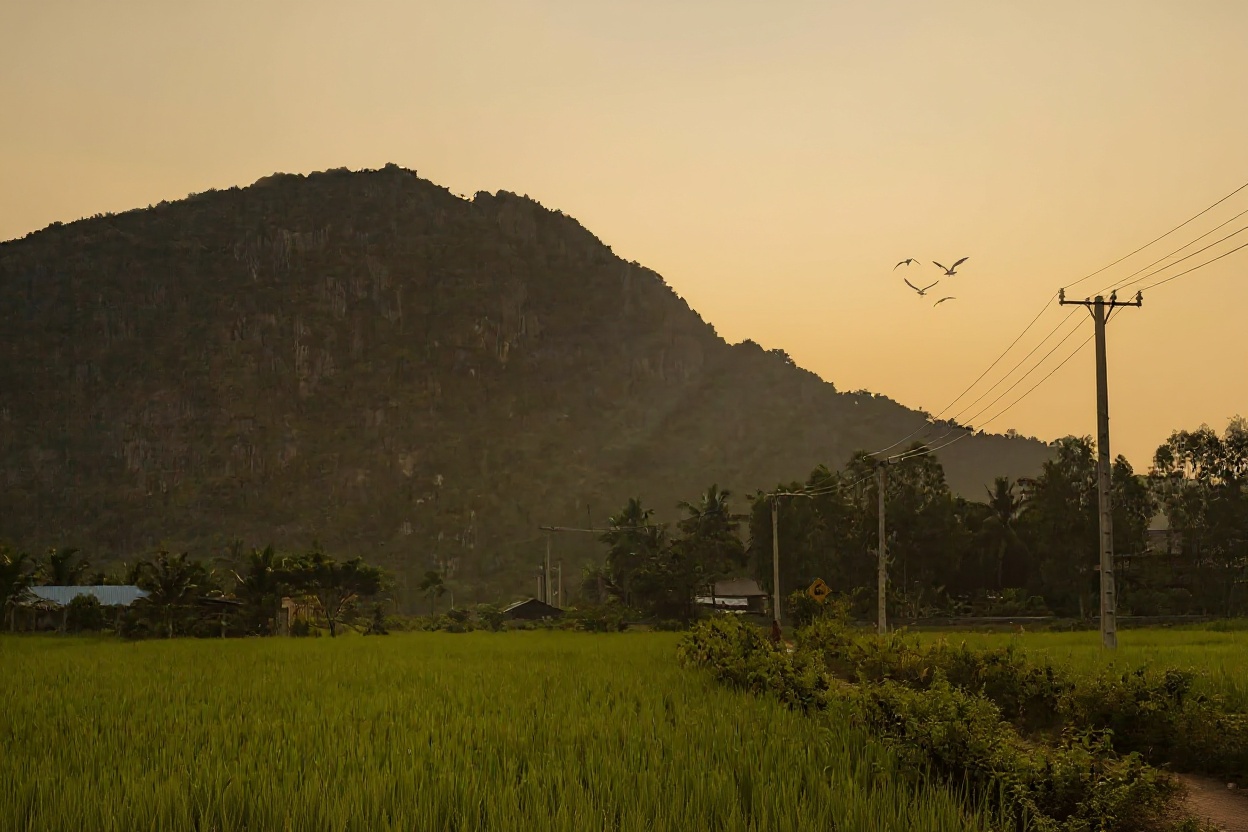
Kampot is a river town. People arrive expecting a beach and find a tidal estuary, which is different — darker water, mangroves on the banks, boats that smell of fish. The Gulf of Thailand is about 20km away by road. If you want a beach, go to Kep (25km east) or Sihanoukville (110km west). If you want the river, you’re in the right place.
The town centre has a small grid of streets with colonial French buildings — a legacy of the protectorate period that ran from 1863 to 1953. The architecture is partly intact, partly crumbling in a way that’s more honest than restored. There’s a roundabout with a durian sculpture. There are cats everywhere. The pace slows about 20 minutes after you arrive.
Kampot’s economy runs on four things: pepper farming (serious, multi-generational), tourism (secondary, seasonal), salt production (the flats between Kampot and Kep are visually striking), and the expat community that’s built up over the past 10-15 years. The expats stayed, opened bars and guesthouses, and created the infrastructure that makes Kampot accessible without making it generic. It’s a reasonably successful version of that transition — not always comfortable, but functional.
⚠Real Talk
Kampot is not a doing destination. If you arrive expecting temples, boat tours at scale, or a packed activity schedule, you’ll be confused. Kampot is for people who want to eat well, sit on a river, read a book, visit a pepper farm, and go up a mountain. If that sounds like two days of content — it becomes four. This keeps happening to everyone.
Kampot Pepper: Why It’s Worth Your Time
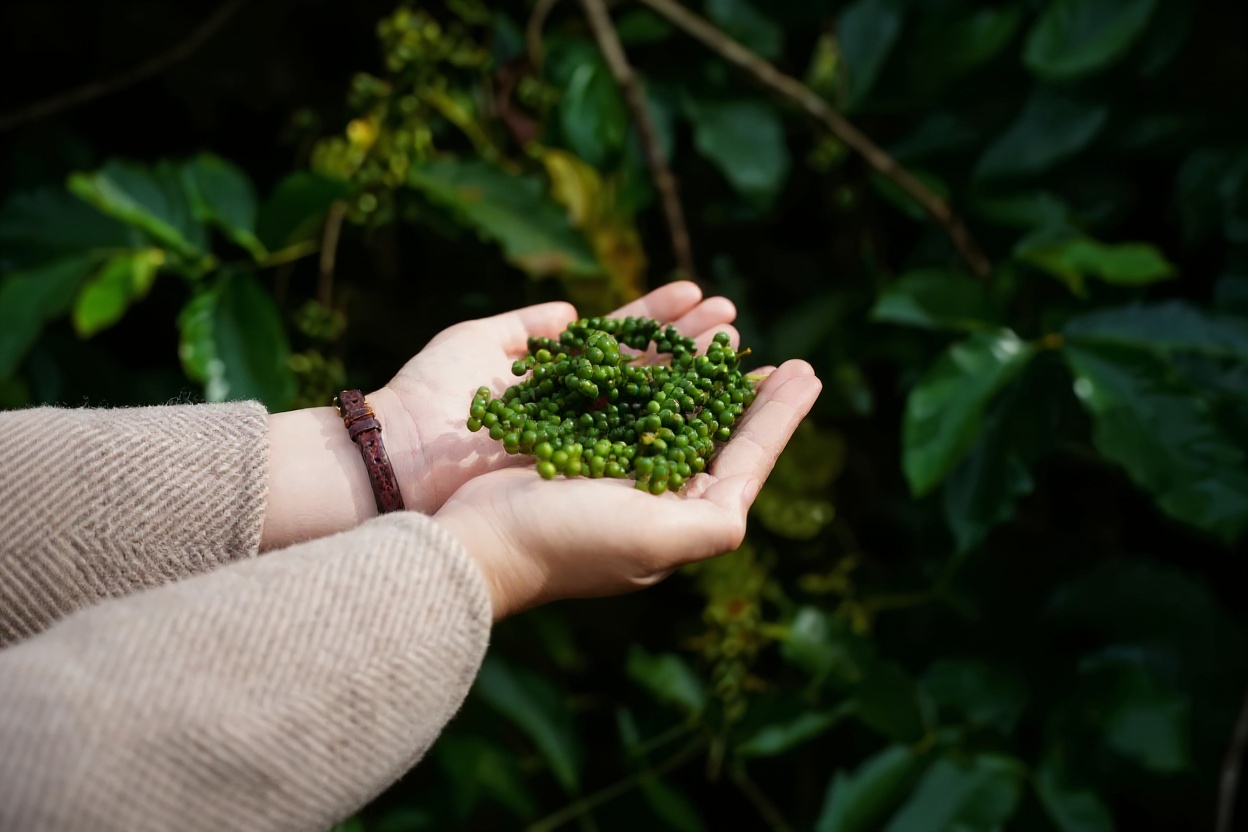
Kampot pepper is not a marketing claim. It’s one of the most highly regarded peppercorns in the world — Kampot pepper has Protected Geographical Indication status, the only agricultural product in Cambodia to have it. Chefs in Paris and London pay a significant premium for it. The reason: the specific combination of soil composition and microclimate in the Kampot-Kep region produces peppercorns with a different chemical profile — floral, fruity, complex in a way that supermarket pepper isn’t.
The four varieties: green (harvested early, fresh, mild), red (fully ripe, sweet, the most prized), black (red sun-dried, the standard export version), and white (red with the outer skin removed, clean and sharp). A farm visit typically includes tasting all four in sequence, which is one of those food experiences that reframes how you’ve been cooking.
Farm tours run $5-15 per person depending on whether they include a meal. La Plantation is the largest and most organised — about 10km outside Kampot, good for families or groups, full guided tour. Smaller family farms on the same road offer more intimate visits and often let you help with whatever’s in season. Both are worth it.
Buy a bag before you leave. Red Kampot pepper (sun-dried) is the one to get — about $8-12 for 100g. The same quantity would cost $25-35 in a London specialty food shop. Fill your luggage allowance accordingly.
•JAMES’S PICK
The smaller family pepper farms on the road toward Phnom Vong give you a more genuine experience than the larger commercial operations. Ask your guesthouse to recommend one — most have a contact with a farm family they trust. You’ll pay $5-8, spend an hour with someone who’s been farming this land for decades, and taste pepper in four stages. Better than any restaurant experience I’ve had in Cambodia.
Bokor Hill Station: The Abandoned French Resort
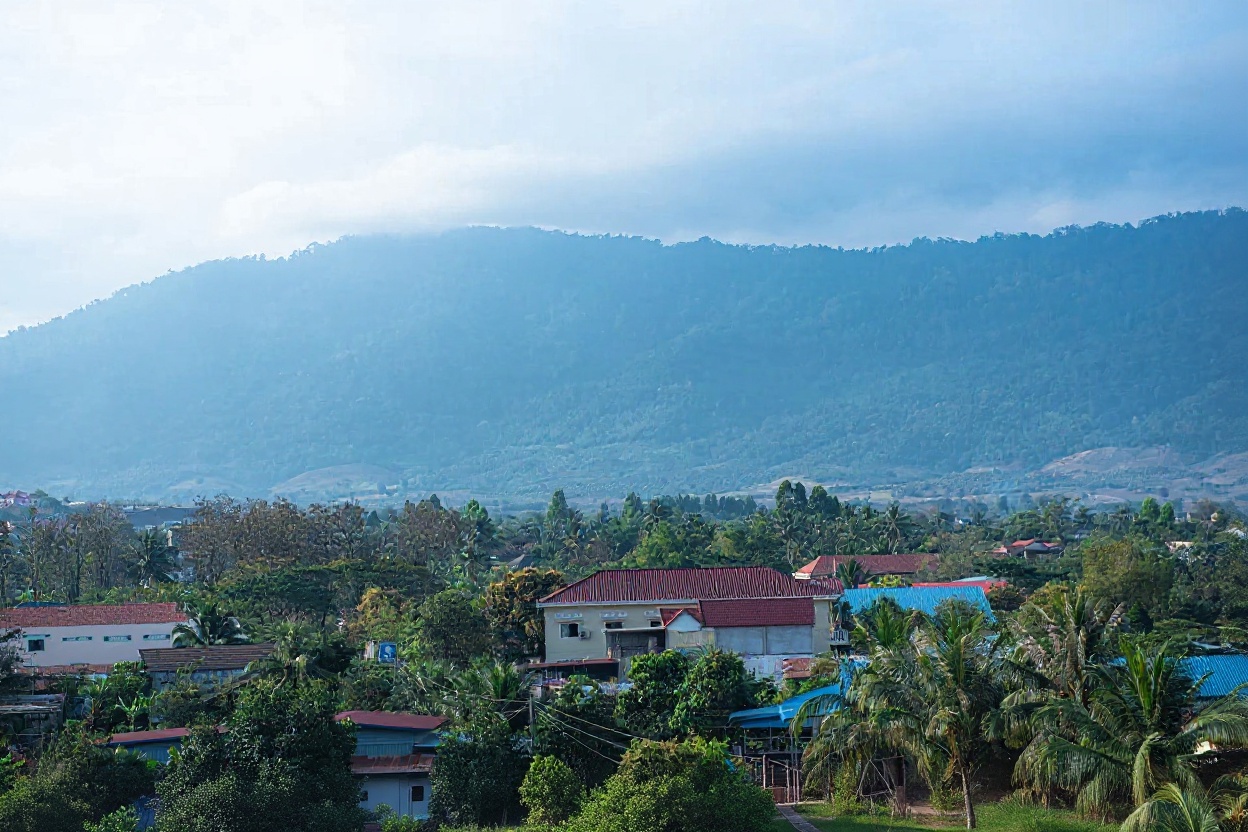
About 35km west of Kampot, at 1,080 metres on the Elephant Mountains, is one of the strangest places in Cambodia. The French built a hill station here in 1921 — a resort for colonial officials to escape the lowland heat. It was abandoned in 1972 as the Khmer Rouge advanced, retaken, abandoned again, and finally reopened when the Cambodian government developed a new casino and resort complex at the summit in the early 2000s.
The old colonial buildings are still there: the Bokor Palace Hotel, the church of St Michael, the former casino. They’ve been partially restored in a way that’s more unsettling than leaving them alone would have been. The new casino operates a few hundred metres from a Catholic church that sat empty for 30 years. The whole plateau tends to be in cloud. The temperature drops 10-15°C from Kampot. It’s genuinely strange.
Getting there: national park entry is $5. From Kampot, most people hire a motorbike (about 15,000 riel / $3.70 per day from guesthouses in town) or take a tuk-tuk for the day (~$25-30 return). The road is paved and fine in dry season. In wet season, sections can flood. Allow 3-4 hours for the round trip with stops.
My confession: I went to Bokor in late September — technically the tail end of wet season — and the road to the pepper farm I planned to visit on the way back was flooded. Not dramatically flooded, just impassably muddy for about 100 metres. I sat on the bank for two hours waiting for a local on a bigger motorbike to show me the bypass route through a field. The Kampot weather page said “possible showers”. Check the actual forecast, not the optimistic summary.
Things to Do in Kampot Beyond the Pepper Farm and Mountain
River kayaking: the Preaek Tuek Chhu river is calm and navigable for most of the dry season. Half-day kayak hire runs $10-15 from most guesthouses, or join an organised trip for a few dollars more. The mangrove sections south of town are the most interesting to paddle through — dark water, tidal smell, kingfishers.
Firefly boat trip: from November to April, the mangrove trees along the river host firefly colonies. An evening boat trip costs $8-12 per person and runs about 2 hours. I was sceptical. I was wrong. The density of fireflies in the mature mangrove sections is genuinely surprising — thousands of lights on a dark river, no artificial illumination for miles. Book through your guesthouse the morning of.
Cave temples near Kampot: Phnom Chhnok, about 8km east of town, is a hillside with a cave at the base containing a 7th-century brick sanctuary — small, well-preserved, and almost always empty. Entry is minimal (a few thousand riel). Hire a motorbike and go in the morning. Take the road toward Kep and look for signs after the salt flats.
Kep day trip: Kep is 25km east of Kampot — about 30 minutes by tuk-tuk ($10-12 return) or motorbike. The Kep Crab Market is the main draw: blue swimmer crabs, cooked with Kampot green pepper, eaten at plastic tables on the pier with a beer for $10-14 total. Kep also has Kep National Park with walking trails and a small beach. Half day is enough; full day if you want to swim.
Salt flats between Kampot and Kep: the road between the two towns passes through working salt flats, best seen in January-March when the evaporation pans are full and the light turns them white. No entry fee, roadside viewing only, interesting for 20 minutes.
Where to Eat in Kampot
Kampot has a disproportionately good food scene for a town of 35,000 people. The pepper helps — most good restaurants in town use local Kampot pepper and the difference is noticeable.
Epic Arts Café — Old Market area. A social enterprise café employing deaf and disabled Cambodian artists. Good coffee ($2-3), solid Western and Khmer breakfast and lunch menu, and work by the artists on the walls. Opens at 7am. I eat breakfast here every time I’m in Kampot. The lok lak (lok-LAK — stir-fried beef with lime pepper sauce) with Kampot pepper is $6 and better than most versions I’ve had.
Rikitikitavi — The Esplanade. Rooftop restaurant on the riverside esplanade. The food is reliable (international menu leaning Southeast Asian), the Kampot pepper steak is correctly the thing to order, and the sunset views over the river are the best from any restaurant in town. Mains run $8-14. Book a table for sunset time in high season.
Captain Chim’s — river road. Local Khmer restaurant, family-run, zero interior design effort, excellent fish amok (ah-MOK — coconut curry steamed in banana leaf). Full meal with rice and a Angkor beer is $6-8. The kind of place where the menu is photocopied and the fish amok is freshly made. This is correct.
Street food on Old Market square: evening market stalls set up around the Old Market roundabout from about 5pm. Noodle soup ($2), grilled corn ($0.50), sugar cane juice ($0.75). Eat here once.
Kampot Nightlife: River Bars and Nothing Complicated
Kampot is not a party destination. The bars are on or near the river, most of them close by midnight, and the energy is “second beer while watching the water” rather than “I lost three hours somewhere”. This is a feature, not a problem.
The Rusty Keyhole: long-running bar on the river road, reliable pool table, cold Angkor ($1.50-2), the kind of place that’s been there long enough that it doesn’t need to try. Opens late afternoon. Gets going around 8pm. Still perfectly functional at 11pm. Closing in by 1am.
Elbow Room: riverside bar with hammocks over the water. The setup is structurally straightforward — order a drink, get in a hammock, watch the river go by — and reliably excellent. Happy hour runs until 7pm most days ($1.50 beers). The sun sets behind the mountains to the west and the light on the water is good from about 5:30pm.
Naga Bar: rooftop, lives music some nights (check the board outside), strong cocktail list for Kampot, $4-6 for a cocktail. Slightly more upscale than the river hammock bars. Good for a change of pace on the second evening.
Where to Stay in Kampot
Budget travellers are well-served — dorms run $8-15, private rooms $18-28. Mid-range has improved significantly in the last three years as the expat community built out the guesthouse sector properly.
Budget: Monkey Republic and Mad Monkey are the reliable hostel brands — both have dorms and cheap private rooms, pools, bars, and the social infrastructure for solo travellers. Expect $8-15 for a dorm bed, $22-30 for a private room with air con.
Mid-range: Several boutique guesthouses operate on the river road north of the Old Market. The setting is better and the noise level lower than the town centre. $40-70/night, most include breakfast. Check Booking.com with the “breakfast included” filter — the price gap disappears when you factor in the morning meal.
Splurge: Knai Bang Chatt, a boutique resort on the water 3km from town, is the best-regarded luxury property near Kampot. Rates from $180/night. The restaurant is worth booking for dinner even if you’re not staying.
Getting to Kampot from Phnom Penh
Bus is the standard option: 148km, 3-3.5 hours, $8-12 depending on the company. Giant Ibis is the most reliable operator — fixed departure times, air conditioning that works, luggage in the hold. Phnom Penh Sorya is cheaper ($6-8) and acceptable. Avoid the cheapest options listed on booking sites — they’ll tell you 3 hours and mean 5.
Giant Ibis departs from their station near the Central Market in Phnom Penh at set times throughout the morning. Book online the night before (the website actually works). They drop at the Kampot bus station on the edge of town; tuk-tuk to a guesthouse from there is $2.
From Sihanoukville: about 1.5 hours, $4-6 by shared minibus. From Koh Rong (the island): ferry to Sihanoukville then bus or shared taxi to Kampot, 2.5-3 hours total. From Bangkok: flights to Phnom Penh then bus south, or minibus via the Hat Lek/Cham Yeam crossing direct to Kampot (about 5 hours from Bangkok, ~$25-35).
Self-drive from Phnom Penh is possible on a motorbike in dry season — the National Road 3 is sealed all the way. Don’t try it in wet season if you value your timeline.
For the full Phnom Penh picture before or after Kampot — the Phnom Penh guide has the riverside, S21, and what to actually eat while you’re there.
When to Visit Kampot
November to March is the sweet spot. The monsoon has cleared, the temperature is 25-30°C during the day (cool by Cambodia standards), and everything is running — pepper farms, firefly trips, Bokor road. The river is navigable. The mountains are visible.
April: hot. 35-38°C, low humidity before the rains arrive. Doable; just bring more water than you think you need and do outdoor activities before 9am or after 4pm.
May to October: wet season. Rain is usually afternoon rather than all-day, but flooding is real and unpredictable. The Bokor road washes out occasionally. Some pepper farms close during peak harvest preparation. Kampot’s river can flood into the old town in bad years. The upside: prices drop 30-40%, the town is much quieter, and the landscape turns an extraordinary green. Experienced SE Asia travellers do well here in October.
The Cambodia best time to visit guide covers the seasonal logic for the whole country — including why Kampot, Siem Reap, and the islands have slightly different optimal windows.
- How do I get from Phnom Penh to Kampot?
- Bus is the standard option — Giant Ibis is the most reliable operator, $8-12, about 3 hours. They depart from near Central Market in Phnom Penh and drop at Kampot bus station. Book online the night before. Tuk-tuk from the station to your guesthouse is $2. Do not book the cheapest option on booking sites — the 3-hour estimate is aspirational.
- What is Kampot pepper and is it worth buying?
- Kampot pepper is a Protected Geographical Indication product grown in the Kampot-Kep region, considered among the world’s finest peppercorns. The four types — green, red, black, and white — each have distinct flavour profiles. Red Kampot pepper (sun-dried) is the one to buy: 100g costs $8-12 in Kampot, $25-35 in London specialty shops. Buy a farm visit for $5-15 and taste the difference first.
- Is Kampot worth visiting?
- Yes, for the right kind of traveller. Kampot rewards people who slow down — it’s not a high-volume activity destination. Budget two to three days: one for Bokor Hill Station, one for a pepper farm, one for Kep day trip. Most people who plan two days spend four. The food is excellent, the riverside atmosphere is hard to replicate, and the pepper farm experience is genuinely unique.
- What is the best time to visit Kampot?
- November to March. Dry, 25-30°C, everything running including firefly trips (best October-April) and pepper farm tours. April is hot but manageable. May to October is wet season — flooding is possible, some activities close, but prices drop 30-40% and the landscape is green. Go in December or January for the best combination of weather and atmosphere.
- What is Bokor Hill Station?
- A French colonial hill station built in 1921 at 1,080 metres in the Elephant Mountains, 35km from Kampot. The original buildings — the Bokor Palace Hotel, a church, the old casino — were abandoned in 1972 when the Khmer Rouge advanced. They’re still there, partially restored, sitting in cloud most mornings. A new casino operates nearby. National park entry is $5; hire a motorbike ($3.70/day) or tuk-tuk ($25-30 return) to get there.
- How many days do you need in Kampot?
- Three is the honest minimum: day one for settling in and a riverside evening, day two for Bokor Hill Station in the morning and a pepper farm tour in the afternoon, day three for Kep crab market and salt flats. Most people extend to four or five because Kampot has a pace that makes it hard to leave on schedule. Build in flexibility.
Kampot vs Kep: Which to Visit, or Both?
The Kampot vs Kep question comes up constantly, and the honest answer is they serve different purposes rather than competing directly.
Kampot is a town with infrastructure — restaurants, a nightlife scene (modest, but it exists), a range of accommodation, and multiple day activities radiating outward. It rewards three to four days. Kep is a former French beach resort 25km east that has a main attraction (the crab market) and a national park, but limited accommodation and almost no evening scene. It rewards a day trip, possibly an overnight if you specifically want the quietest possible version of the southern coast.
If you have four days on the southern coast: three in Kampot, one day-tripping to Kep. This is the arrangement that gives you the best of both without leaving either underserved. The tuk-tuk or motorbike between them takes 30–40 minutes on a good road.
If you have two days: base in Kampot, Kep as a day trip. Kampot wins on the overnight question because the accommodation is better, the restaurant scene is better, and you need a base for the Bokor Hill Station and pepper farm visits that don’t work from Kep.
Kep is worth specifically visiting for: the Kep Crab Market (blue swimmer crab with Kampot green pepper, $10–14 for a full crab meal at the pier), the Kep National Park walking trails (1.5–2 hours, views over the Gulf of Thailand), and Rabbit Island (Koh Tunsay, 20 minutes by boat from the pier, $7 return, a small island with basic accommodation and a beach that’s genuinely pleasant).
The Bottom Line on Kampot
Kampot is the place where Cambodia trips that were supposed to be two weeks turn into three. The pepper is genuinely excellent. The mountain above town is genuinely strange. The river at sunset from a bar with a hammock is genuinely difficult to leave on time.
None of this is dramatic. That’s the point. Get the bus from Phnom Penh. Buy red pepper at a family farm. Go up the mountain in the cloud. Eat crab in Kep. Sit on the river. Extend your stay by one day. Then probably extend it again.
Questions in the comments — I check them most days.