Last updated: June 2026 — prices and opening times verified June 2026.
Everyone comes to Siem Reap for Angkor. That’s correct — Angkor Wat is genuinely one of the most extraordinary things on earth, and you should be there. But you’ve got three days, the temples take one day well and two days properly, and the question is what to do with the rest. This guide covers that. The temples, yes — but more importantly, what the rest of Siem Reap actually offers once you’ve worked out that Pub Street is not the answer.
I’m based in Phnom Penh, four years in. I’ve been to Siem Reap eleven times — some for work, some because friends needed showing around, once because I missed the bus to Kampot and made the best of it. I know which version of the floating villages is worth the boat ride and which one is a tourist exercise with a gift shop at the end.
Right. Here’s what to actually do.
Angkor Wat — How to Not Waste It
Let’s start with the obvious, because the obvious is genuinely extraordinary and worth doing properly.
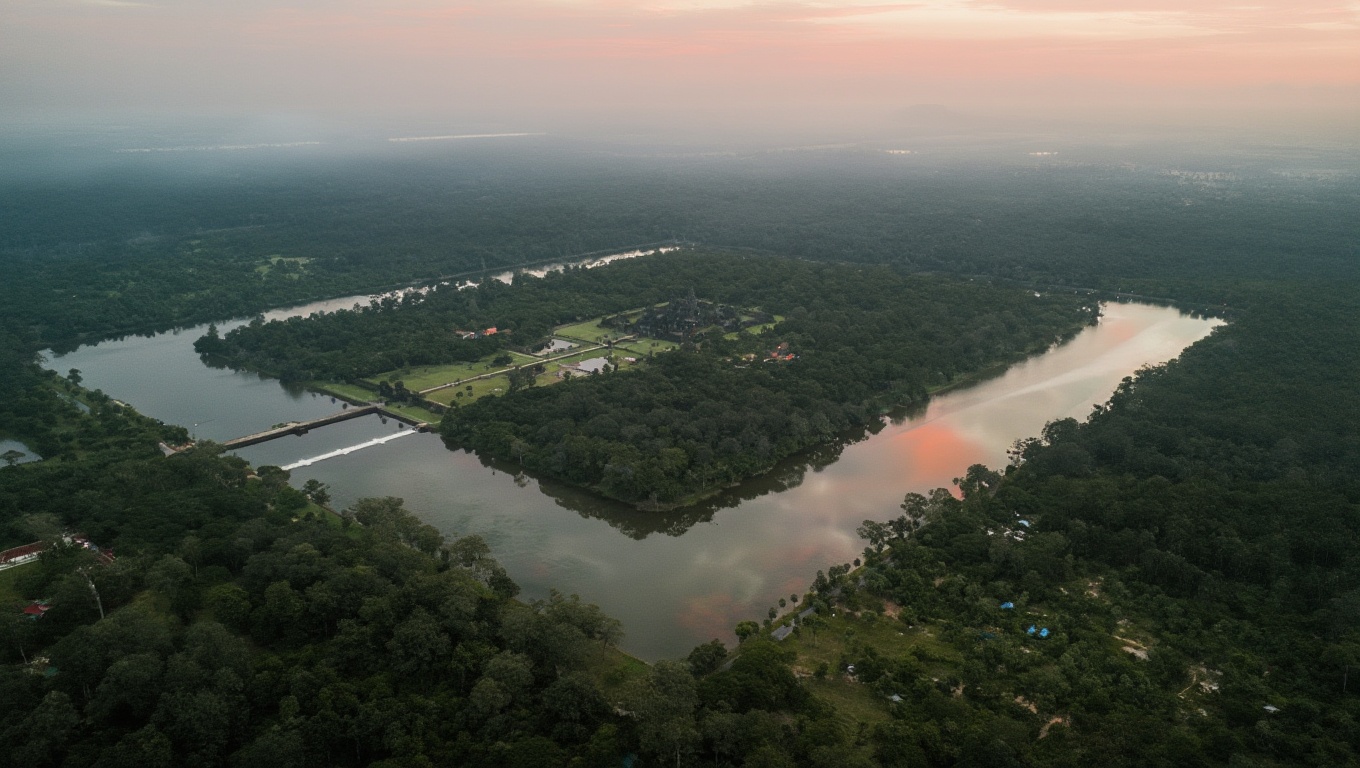
Angkor Wat is a 12th-century Hindu-turned-Buddhist temple complex that was the centre of the Khmer Empire. The main temple is the largest religious monument on earth. The complex covers 400 square kilometres. You cannot do it in a day. You can see the headline sites in a day, but you’ll spend most of that day being herded around by tour groups in the wrong light.
The practical answer:
– 1-day pass: $37. Covers the main complex and a few outlying temples. Enough if you’re genuinely pressed.
– 3-day pass: $62. Worth it. Do the main complex properly on day one (Angkor Wat, Bayon, Ta Prohm), then Banteay Srei and the outer temples on day two, leave day three for what you missed or go back to Bayon at a different time of day.
– Sunrise at Angkor Wat: the classic view is from the northwest corner of the reflecting pool. Get there before 5:30am. The crowds start arriving from 6am and it’s genuinely crowded by 6:30. Before that, in the dark before the sky goes pink, there are maybe twenty people. Worth it.
– Bayon over Angkor Wat for ‘the shot’: the Bayon — the temple of the giant stone faces — is actually more interesting to spend time in than Angkor Wat itself. Less crowded in the afternoon, better for photography, and the faces catch different light all day.
⚠Real Talk
Ta Prohm — the “Tomb Raider temple” where tree roots grow through the walls — is absolutely worth seeing. It’s also, in peak season, completely overrun with tourists re-enacting the movie. Go at 7:30am when it opens or at 4pm when the tour groups are leaving. The experience at those times is completely different from midday.
Tuk-tuk or e-bike? A tuk-tuk driver for a full temple day costs $15–20 for a small circuit. Negotiate before you get in, be clear about which temples you want. An e-bike rental ($15–20/day) gives you freedom to stop where you like. The roads in the complex are good. The heat from 11am to 2pm is genuinely difficult on a bike — plan accordingly.
Phare Circus — Do This on Your Last Evening
Here’s the thing about Phare Circus: every guide mentions it, and it still gets undersold.
Phare, the Cambodian Circus, is a social enterprise circus school and performance company based in Siem Reap. The evening shows combine acrobatics, physical theatre, live music, and storytelling — all built around Cambodian history and folklore. The performers are graduates of the Phare Ponleu Selpak arts school in Battambang, most of them from disadvantaged backgrounds.
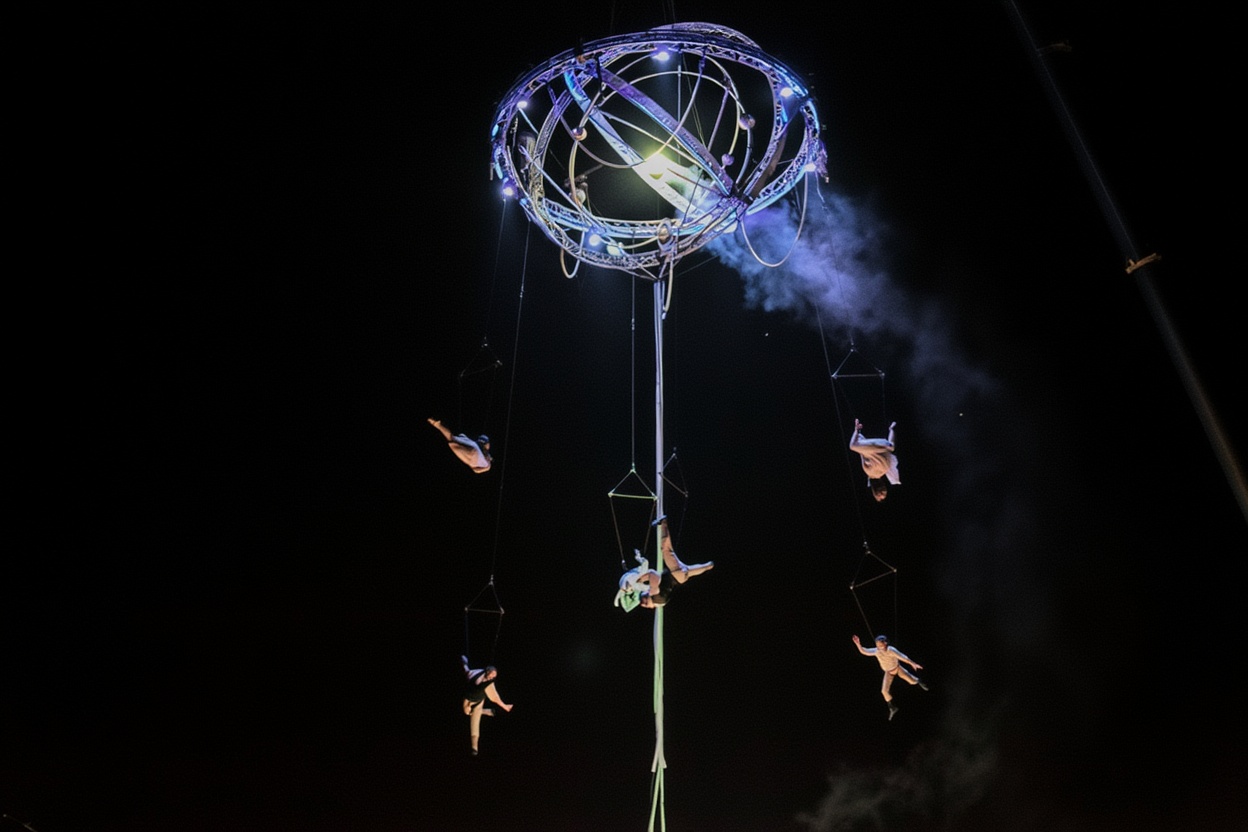
The show runs nightly. Tickets: $18–38 depending on seat tier. Book online in advance — the better seats sell out, especially November through March.
I’ve seen it twice. The second time was with friends from Manchester who’d been sceptical about “the circus” and spent the whole show laughing and leaning forward. It’s the kind of performance where you forget to check your phone. In Siem Reap, that’s rarer than you’d think.
•JAMES’S PICK
Book the Tuesday or Wednesday show — smaller crowds, same quality, slightly less chaotic getting a seat before the show starts. The bar outside is open from 7pm. Get there early and have a drink rather than rushing in at 8pm.
The Landmine Museum
The Akira Landmine Museum — formally the Cambodia Landmine Museum Relief Fund — sits about 25km north of Siem Reap on the road toward Banteay Srei. It’s a 30-minute tuk-tuk ride ($6–8 each way).
Aki Ra, the founder, was a child soldier who laid landmines for the Khmer Rouge and then spent decades clearing them by hand. The museum documents the landmine crisis in Cambodia, which is ongoing — Cambodia is one of the most heavily mined countries in the world, and casualties still happen in rural areas.
It’s not a comfortable visit. It’s one of the most important things to understand about Cambodia if you’re spending time here. Entry is a donation — $5–10 is appropriate.
Going here before or after Angkor gives you the historical context that makes the whole country make more sense. The Khmer Empire that built Angkor Wat and the Khmer Rouge that nearly destroyed Cambodia are not as distant from each other as they feel. The museum bridges that gap honestly.
Tonle Sap Lake — But Not the Tourist Version
The Tonle Sap is the largest freshwater lake in Southeast Asia. During rainy season it expands to five times its dry season size. People live on it, in floating villages that have been there for generations.
Here’s the problem: the floating village at Chong Kneas, 15km south of Siem Reap, is the default tourist option and it’s become a fairly cynical exercise — a boat ride past staged poverty with a gift shop at the end. I went once. I won’t go again.
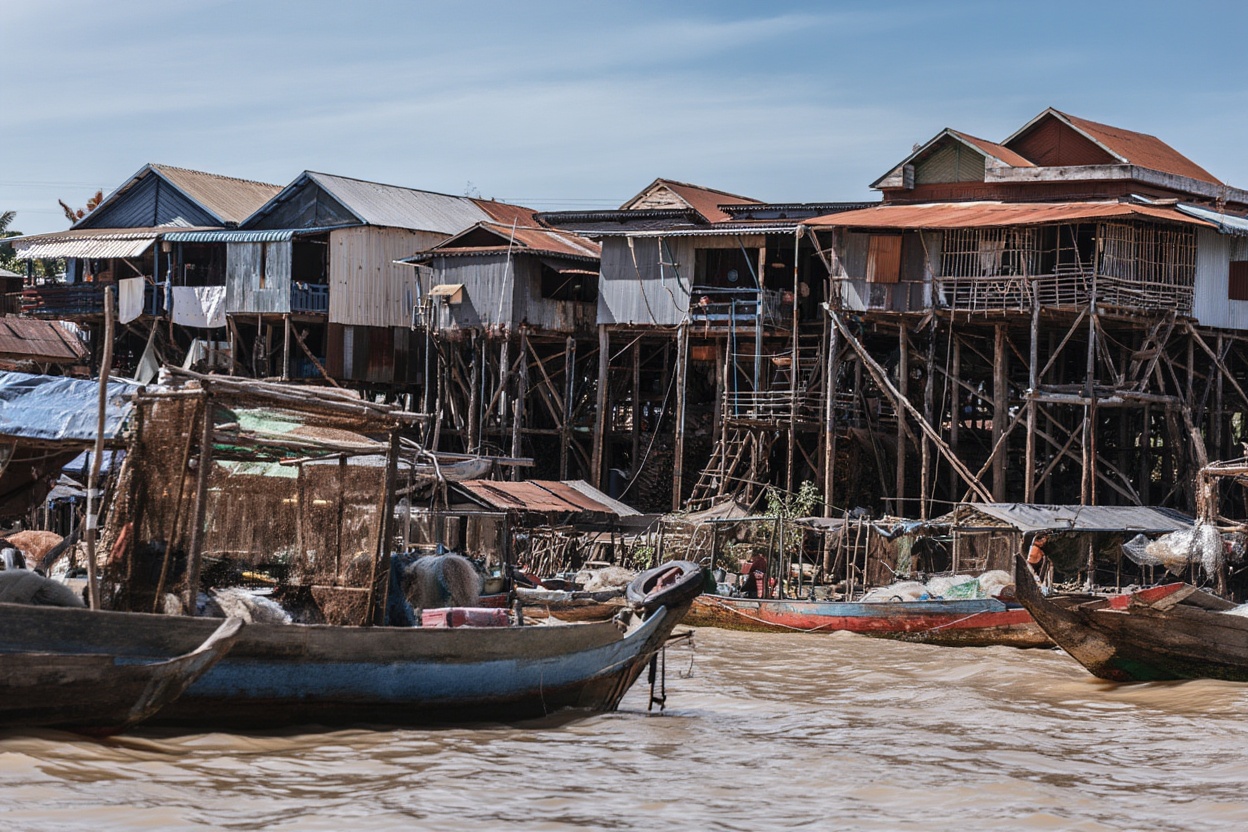
Go to Kampong Khleang instead. It’s 55km from Siem Reap (1.5 hours by tuk-tuk, $25–30 return). It’s a real village — 10,000 people, stilted houses on the lakeshore that rise 8 metres to stay above the wet season flood level, a working community that isn’t primarily structured around tourist visits. Boat trips around the village cost $8–12 per boat. Take a local guide rather than going alone — $10–15, and the context they provide is what makes the visit worthwhile.
Banteay Srei — The Temple Worth the Extra Drive
Banteay Srei sits 38km north of Siem Reap. It’s included in the Angkor pass. It’s also routinely listed last on itineraries and skipped by anyone doing a one-day temple sprint.
Don’t skip it. Banteay Srei is the most intricately carved temple in the Angkor complex — pink sandstone covered in detailed bas-relief work that makes the main Angkor Wat look almost plain by comparison. It’s smaller than most Angkor temples, which means you can see it properly rather than being overwhelmed.
Combine it with the Landmine Museum on a half-day trip (they’re on the same road north of Siem Reap). Leave at 7am, Banteay Srei first, museum on the way back, lunch in town by 1pm before the heat peaks.
Tuk-tuk to Banteay Srei: $15–20 return, negotiate before you go.
A Cooking Class That’s Actually Worth Doing
Siem Reap has no shortage of cooking classes, and most of them are indistinguishable from each other — you make fish amok, lok lak, and fresh spring rolls, and you eat them at the end.
The ones worth doing are the ones that start with a market visit. Going to the old market (Psar Chas) with a Khmer cook at 7am before the heat starts, watching them choose ingredients, getting some context on what’s actually in the fish amok paste — that’s the worthwhile version.
Cooks in Tuk Tuks and Le Tigre de Papier are both solid. Budget $25–35 for a half-day class including market visit and meal. Book 24 hours ahead.
I’ll be honest: if you don’t care much about cooking and just want to eat Khmer food, put the $30 toward dinner somewhere good and skip the class. But if food is part of why you travel, the market-to-table version is one of the better two hours you can spend in Siem Reap.
The Siem Reap Night Market — Calibrated Expectations
The night market area around Sivutha Boulevard and the Old Market runs every evening from around 5pm. It sells the usual Southeast Asia market range: clothing, souvenirs, street food, fresh coconuts.
It’s fine. It’s not revelatory. The Angkor Night Market has a reasonable artisan section with genuine local craft — silk, silver, lacquerware — if you want to buy something that isn’t mass-produced. The street food stalls around Psar Chas (Old Market) are better value than the market restaurants, and the noodle soups from the vendors on the east side of the market are the ones I’d point you toward.
Pub Street itself — the neon strip that every Siem Reap photo seems to feature — is exactly what it looks like: a tourist bar street with cheap drinks and loud music. If that’s your evening, fine. If you want a drink in a place that isn’t performing for visitors, try Asana Wooden House (Khmer cocktails, terrace, actual atmosphere) or The Warehouse (proper bar, unpretentious, local crowd mixed in).
The War Museum
The Cambodia War Museum, 2km north of the Old Market, is a collection of military vehicles, weapons, and ordnance from the various conflicts that ran through Cambodia from the 1960s through the 1990s. Some of the pieces are staggering in scale — tanks, artillery, attack helicopters — and the guides are mostly veterans or landmine survivors who explain the context from first-hand experience.
Entry: $5. The guided tour (included) is the reason to go rather than just walking around the equipment. Budget 1.5 hours.
Less known than the Killing Fields or Tuol Sleng in Phnom Penh, but worth the detour if you want to understand the full arc of what Cambodia went through.
Planning Basics
Best time to visit Siem Reap:
– November to February: cool and dry, peak season, Angkor at its most crowded. Book accommodation 6–8 weeks ahead.
– March to May: hot and dry. Angkor crowds thin out. Temperatures hit 38°C+. Start early, rest midday.
– June to October: wet season. Afternoon rain, lush green landscape, Tonle Sap at its fullest. Crowds are genuinely thin. The temples are beautiful in this light. Some roads flood. Bring a poncho.
Getting there:
– Siem Reap International Airport (REP) has direct flights from Bangkok, Kuala Lumpur, Singapore, Ho Chi Minh City, and Phnom Penh.
– Bus from Phnom Penh: 6 hours, $8–12. Giant Ibis and Mekong Express are the operators worth using.
– Bus from Bangkok via Poipet border: possible but long (8–10 hours). The border at Poipet is known for scams — read up before you go.
Getting around Siem Reap:
– Tuk-tuk: negotiate a full-day rate ($20–25) rather than per-trip if you’re doing a temple circuit.
– E-bike rental: $15–20/day. Gives you full flexibility.
– Grab (the Southeast Asia Uber equivalent) works in Siem Reap. Honest pricing, no negotiation needed for city trips.
When to Visit Each Attraction (Best Times by Hour and Season)
The difference between Angkor Wat at 5:45am and Angkor Wat at 10am is not a small difference. It’s the difference between a profound experience and a queue. Timing matters more in Siem Reap than almost anywhere else in Southeast Asia.
Angkor Wat (main temple):
– Best: 5:15–6:30am for sunrise. 3:30–5pm for late afternoon light on the west-facing towers.
– Worst: 9am–2pm in peak season (November–March). The main causeway is impassable with tour groups.
– Days: Wednesday and Thursday are visibly quieter than weekends. Avoid the period around Khmer New Year (mid-April) when domestic visitors arrive in large numbers.
Bayon (the stone faces temple):
– Best: 7–9am (golden morning light on the faces) or 3–5pm (shadows create depth in the carvings).
– The Bayon is actually *more* interesting than Angkor Wat for time spent, and stays less crowded throughout the day because the tour groups always prioritise the main temple first.
Ta Prohm (the tree-root temple):
– Best: 7–8am or 4pm onward.
– Avoid: 10am–2pm. This is the busiest temple in the complex after the main Angkor Wat because everyone wants the Tomb Raider photo.
Banteay Srei:
– Best: first thing in the morning (it opens at 7:30am). The 38km drive from Siem Reap means tour groups don’t get here until 9–10am.
– The pink sandstone catches the morning light particularly well — the carvings look different at different times of day.
Phare Circus:
– Shows run nightly at 8pm. The Tuesday and Wednesday shows attract smaller crowds than Friday and Saturday.
– Arrive at 7pm for a drink at the outdoor bar — rushing in at 7:55pm means scrambling for seats.
Kampong Khleang floating village:
– Best in wet season (June–October) when the lake is at its fullest and the stilted houses are at their most dramatic height above the water.
– Dry season visits (January–April) still work but the water level is lower and the village sits higher above dry ground than you expect.
The Siem Reap markets:
– Old Market (Psar Chas): 6–8am is when the local vendors are there with fresh produce. By 9am it’s shifted to tourist-facing goods.
– Night market: comes alive from 6pm. Best between 6–9pm before it gets crowded.
What to Skip in Siem Reap (And What to Do Instead)
Every city has its tourist traps, and Siem Reap has a few worth naming directly.
The Chong Kneas floating village. I’ve already mentioned this in the Tonle Sap section — the 15km-from-town floating village that appears on every itinerary is a staged tourist exercise. The boats are motorised tourist vessels, the village is arranged for visitors rather than functioning normally, and the gift shop at the end is the point of the exercise. Go to Kampong Khleang (55km, $25–30 tuk-tuk return) instead. The extra 40 minutes each way is worth it.
Pub Street after 9pm. Before 9pm it’s a colourful street with cheap drinks and a certain tourist energy that’s worth seeing once. After 9pm it becomes loud, occasionally aggressive in terms of bar touts pulling you in, and the food quality at the tourist bars is poor. If you want a drink in the evening, go to Asana Wooden House or The Warehouse and be done by 9pm if you want to avoid the carnival atmosphere.
The “Cultural Show” dinner packages. Siem Reap has several restaurants offering Apsara dance performances with a set dinner menu. Some are fine; many are watered-down versions of classical Khmer dance aimed squarely at package tourists, served with mediocre buffet food. If you want to see Cambodian performing arts done properly, Phare Circus is the answer — it’s the genuine article.
Quad bike tours through the rice fields. These are marketed everywhere in Siem Reap and seem appealing. In practice: the “scenic rice fields” are largely indistinguishable from any agricultural flat land, you’re sitting on a loud vehicle, and the routes are mostly gravel tracks shared with actual farm vehicles. The tuk-tuk or e-bike option for temple days gives you more freedom and more interesting terrain.
What to do instead of all of the above: the Landmine Museum, Banteay Srei, a proper morning at the Old Market, Kampong Khleang, and a cooking class that starts at Psar Chas. That’s a better three days than the standard itinerary produces.
Where to Stay in Siem Reap
Siem Reap’s accommodation splits cleanly into three zones. Where you stay determines how much you walk, how much you pay for tuk-tuks, and how much Pub Street noise you hear at 1am.
The Old Market area (central, most popular): Within walking distance of Pub Street, the night market, the Old Market itself, and a cluster of good local restaurants. The downside: you’re in the tourist epicentre and the noise carries further than walls suggest on Pub Street nights. Budget guesthouses $15–25, mid-range $35–60. This zone is right for most first-time visitors who want everything accessible.
North of the river (quieter, still central): The streets north of the Siem Reap River around the Wat Bo area are quieter, have good mid-range guesthouses, and are a 10-minute walk or $2 tuk-tuk from the Old Market. Better for sleep, similar access to the main circuit. Recommended for anyone staying four or more nights.
Near Angkor (convenient for temples, remote from town): Several resorts and guesthouses operate in the 3–5km zone between Siem Reap town and the temple complex. Useful if you’re spending most of your time at the temples and want to minimise the morning tuk-tuk. The trade-off: you’re 20–25 minutes from the town restaurants and markets.
James’s honest picks by budget:
Budget ($15–25/night): Mad Monkey Hostel (north of Old Market, pool, social scene, reliable dorms and private rooms). The Onederz Hostel (clean, central, consistent reviews). Avoid the cheapest options directly on or immediately adjacent to Pub Street — noise is the issue, not cleanliness.
Mid-range ($40–70/night): Navutu Dreams (peaceful, pool, northwest of town — slightly remote but genuinely restful). Ree Hotel (Wat Bo area, courtyard pool, well-positioned). Babel Guesthouse (Wat Damnak area, garden, genuinely characterful without being overpriced).
Splurge ($90–180/night): Jaya House River Park (riverside, pool, one of the best-reviewed properties in town). Maison Polanka (boutique colonial, garden, exceptional breakfast). Both are worth the price for a special-occasion stay — Cambodia is cheap enough that the splurge tier is still very reasonable by international standards.
When to book: December through February is peak season. Book 4–6 weeks ahead for anything mid-range or above. March through May and October–November are fine with a week’s notice. June–September: same-day booking usually available, prices 30–40% lower.
- How many days do you need in Siem Reap?
- Three days is the right amount for most people. Day one: main Angkor circuit (Angkor Wat sunrise, Bayon, Ta Prohm). Day two: Banteay Srei + Landmine Museum in the morning, Phare Circus in the evening. Day three: Kampong Khleang floating village or more Angkor temples if you bought the 3-day pass. Two days works if you’re rushed but you’ll feel like you’re sprinting. Four days is comfortable if you want to slow down.
- What is Phare Circus Siem Reap?
- Phare is a Cambodian circus and physical theatre company whose performers are graduates of the Phare Ponleu Selpak arts school in Battambang. The nightly shows combine acrobatics, live music, and storytelling based on Cambodian history and folklore. Tickets: $18–38. Shows run nightly at 8pm. It’s consistently the best non-temple activity in Siem Reap. Book online in advance, especially November through March.
- Is the floating village at Siem Reap worth visiting?
- Chong Kneas (the default tourist floating village, 15km from Siem Reap) is a staged tourist experience that most independent travellers find disappointing. Skip it. Go to Kampong Khleang instead — 55km from Siem Reap, a genuine working community of 10,000 people, accessible by tuk-tuk ($25–30 return) with local boat trips ($8–12). It takes more effort and is substantially more worthwhile.
- What is the Angkor pass and how much does it cost?
- The Angkor Archaeological Park pass is required to visit any temple in the complex. A 1-day pass costs $37. A 3-day pass costs $62 (valid over any 3 days within a week). A 7-day pass costs $72. Buy at the official ticket office on the main road to Angkor — not from touts in the city. The 3-day pass is worth it for most visitors: it lets you do the main circuit properly on day one and explore outlying temples including Banteay Srei on day two.
- Is Pub Street worth visiting in Siem Reap?
- It’s worth seeing once — it’s a notable part of Siem Reap’s post-conflict tourist development and it’s visually striking. As an evening destination, it’s a standard tourist bar strip with cheap drinks and loud music. For a drink with atmosphere, Asana Wooden House (Khmer cocktails, terrace) or The Warehouse (unpretentious, local crowd) are better options nearby. If you want the Pub Street experience, go early (7–9pm) rather than late when it becomes a fairly chaotic backpacker scene.
- How much does a tuk-tuk cost in Siem Reap?
- Negotiate a full-day rate for temple days: $20–25 covers the small Angkor circuit. For specific trips: airport to town is $8–10, town to Banteay Srei return is $15–20. City trips within Siem Reap: $2–5 depending on distance. The Grab app works in Siem Reap and gives transparent pricing without negotiation — useful for shorter trips where you don’t want the back-and-forth.