Last updated: June 2026 — James Hartley. Prices and logistics verified June 2026.
What Happened to Sihanoukville
I’ll be straight with you about something that took me a while to understand: Sihanoukville didn’t decline — it transformed. Between 2016 and 2020, Chinese investment poured in, casinos went up faster than anything else, and the strip that used to be budget guesthouses and beach bars became a different city entirely.
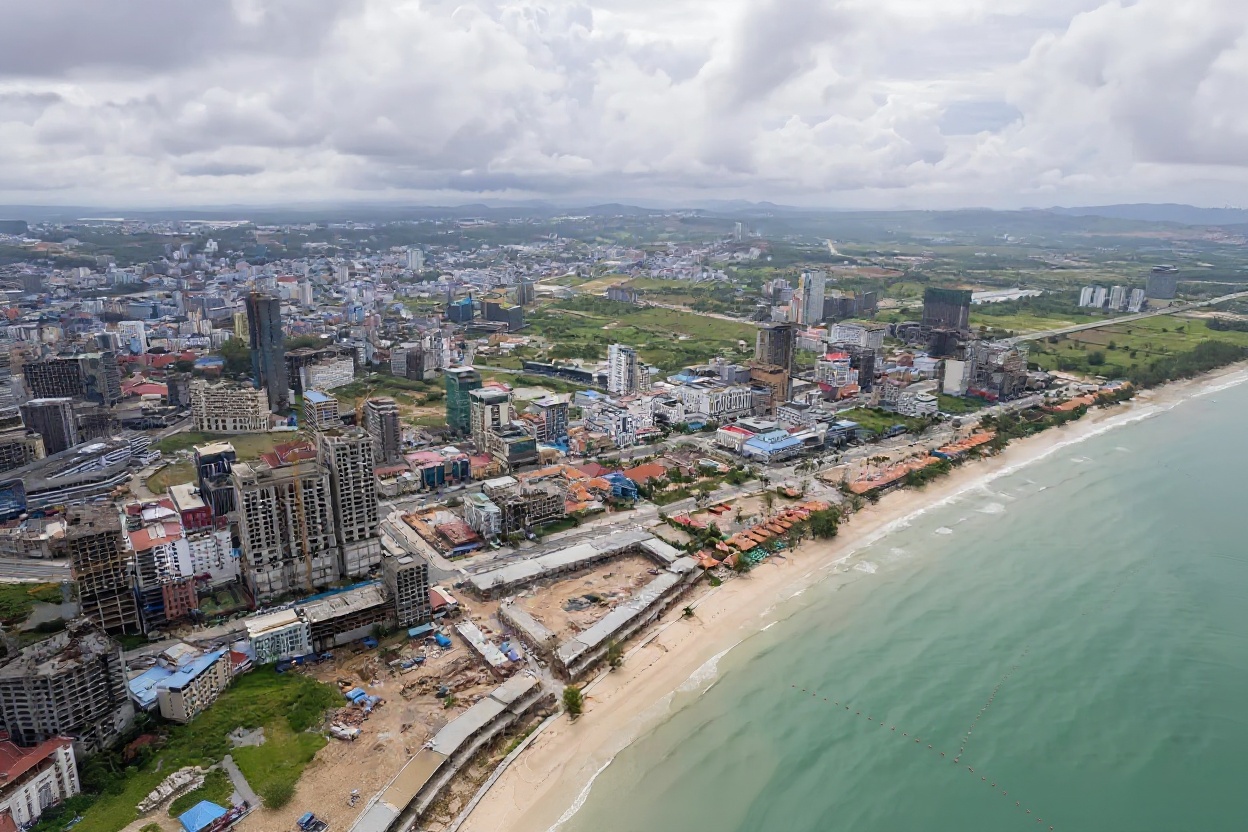
The result: “Casinos, half-finished towers, Chinese supermarkets that sold only Chinese imports — even fruit and vegetables.” That’s a traveller description from Reddit, and it’s accurate. The city now runs two parallel tracks. One is Chinese casino tourism. The other is backpackers and independent travellers passing through on the way to the islands.
Both tracks exist simultaneously and don’t really intersect. Which one you experience depends almost entirely on where you stay and what you do.
The Beaches: What They’re Actually Like
Ochheuteal Beach — the main beach — is better than its reputation suggests. The sand is fine and white, the water is clear enough for swimming, and the southern end (away from the development) is actually pleasant.
Between Sokha and Ochheuteal, the new Techo Square boardwalk connects the two beaches. It’s modern, well-lit, and a legitimate place to walk in the evening. This is the Sihanoukville that’s been cleaned up and invested in.
The beach setup cost — chairs and umbrella — runs about $3–5 USD and is negotiable. The vendors are persistent but not aggressive. “It’s best to steer clear of the casinos and certain bars within the city. However, the beach bars appear to be safe.” That’s a long-term resident’s summary, and it matches what I’ve seen.
Sokha Beach, at the northern end, has a resort section (Sokha Hotel controls part of it) but the public section is accessible. Slightly less crowded than Ochheuteal.
The Casino Situation
Sihanoukville has a reputation as a “hotspot for kidnappings and scams.” I want to give you a proportionate picture of this.
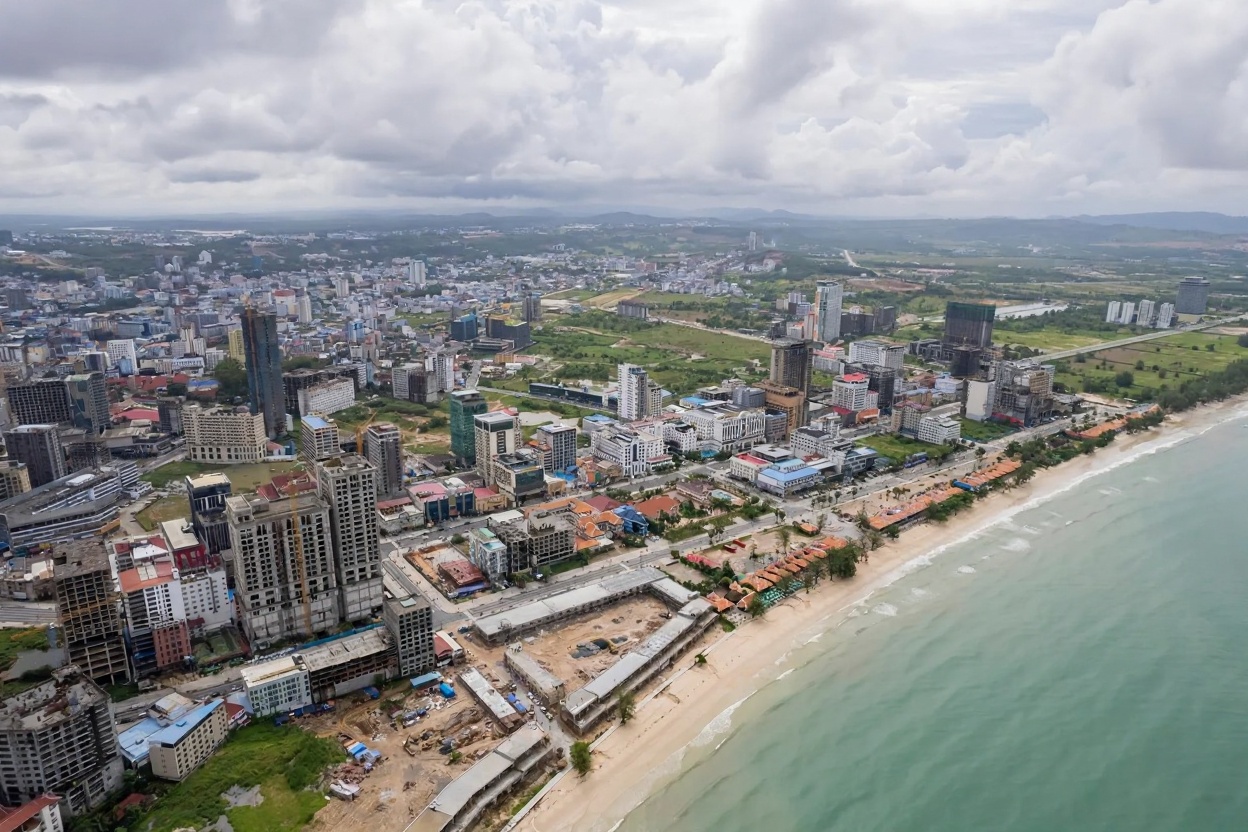
The long-term resident view from r/howislivingthere (an AMA from someone based there): “Issues with scams and organized crime groups from China, but their activities largely remain confined to their own circles and don’t typically impact locals, expats, or tourists.”
The practical advice: stay away from the casinos and the specific bars associated with them. The beach area and the traveller-facing restaurants are a different environment. Standard Southeast Asia street sense applies — don’t flash valuables, don’t go drunk into unknown areas at night, use licensed taxis or Grab.
People describing Sihanoukville as “extremely unsafe” are mostly drawing on secondhand information or an older version of the place. People saying it’s “actually very safe” are describing their specific experience in the tourist-facing parts. Both statements contain truth. Navigate accordingly.
Koh Rong and Koh Rong Sanloem: The Real Reason to Come
Here’s the honest version of why you stop in Sihanoukville: the ferry to Koh Rong leaves from here.
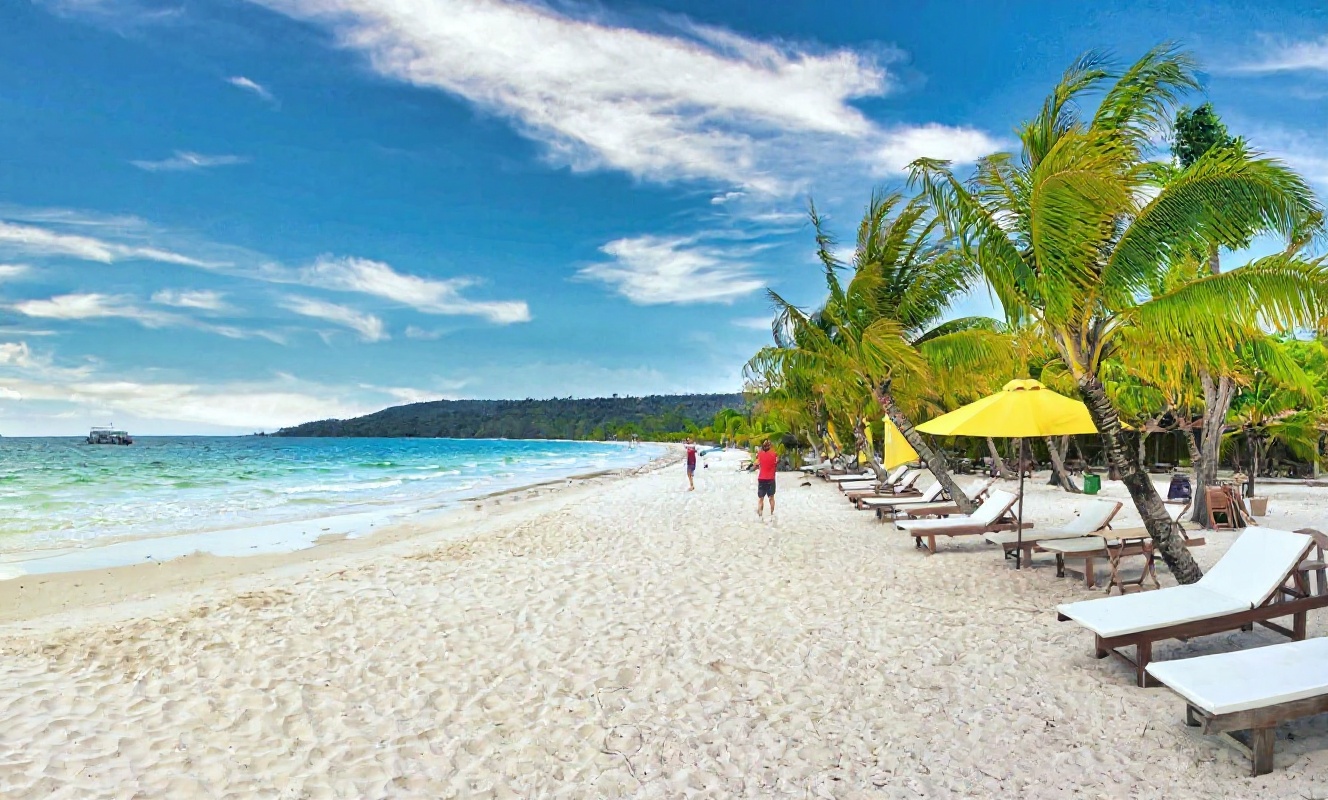
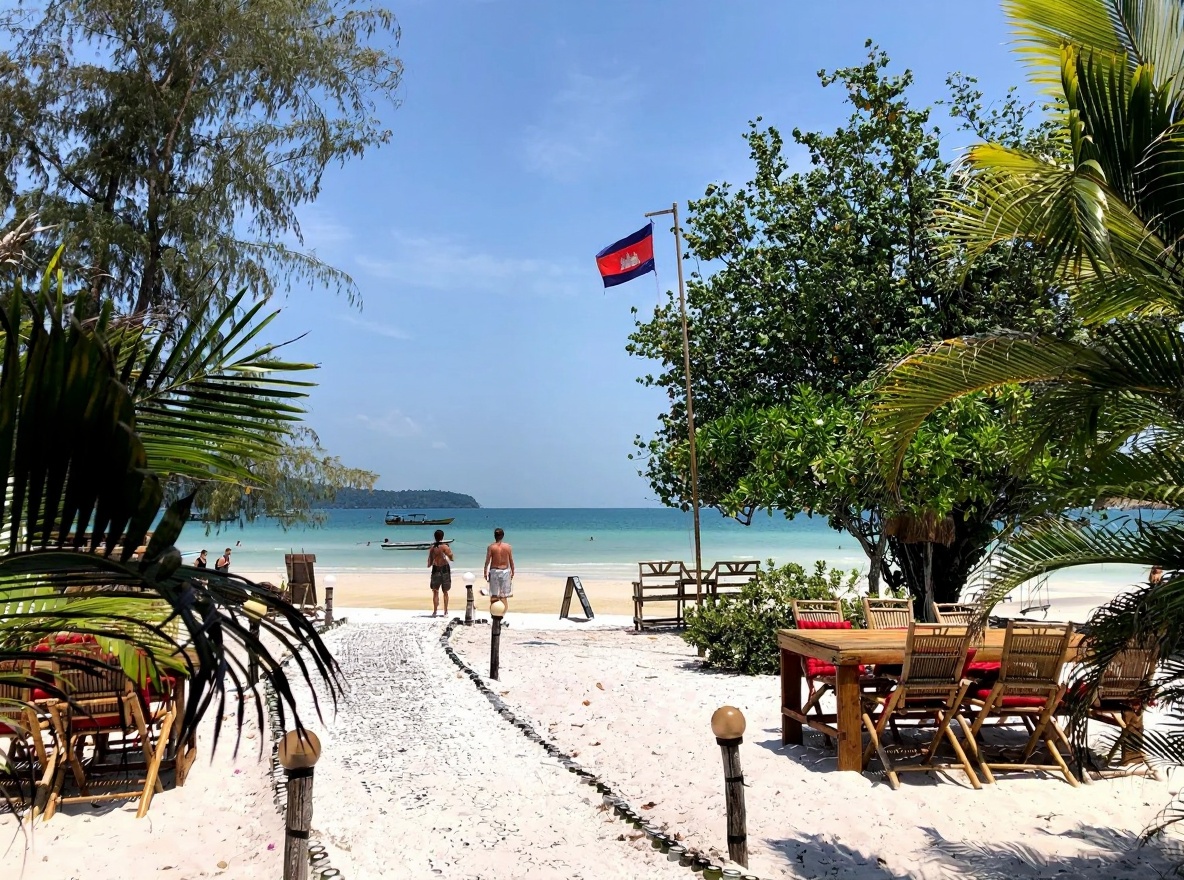
Koh Rong is a proper island — white sand beaches, clear water, guesthouses ranging from $15/night beach huts to mid-range resorts, a small village strip with restaurants and bars. Popular with young backpackers. Loud in the evenings at Long Set Beach. Quieter elsewhere.
Koh Rong Sanloem is the one I’d choose. Smaller. Less infrastructure. Saracen Bay has the kind of beach that resets your baseline for what “nice beach” means — calm water, fine sand, and no beach clubs cranking music until 2am. The guesthouses are basic but clean. The pace is slow.
Round trip ferry from Sihanoukville to the islands costs about $35–40 USD. Buy tickets at the pier or through your guesthouse. GTVC and Speed Ferry Cambodia are the main operators — book the day before in high season (December–February) or you’ll scramble.
My mistake: I went to Koh Rong in August. It rained every afternoon, the sea was choppy, and the overnight ferry I’d planned didn’t run. Went back in February. Completely different experience. Go in the dry season.
Getting to Sihanoukville
From Phnom Penh, the bus takes 3–4 hours on a route that’s mostly good road. Prices start at $12 for the basic operators and run to $18–21 for Giant Ibis and other premium services.
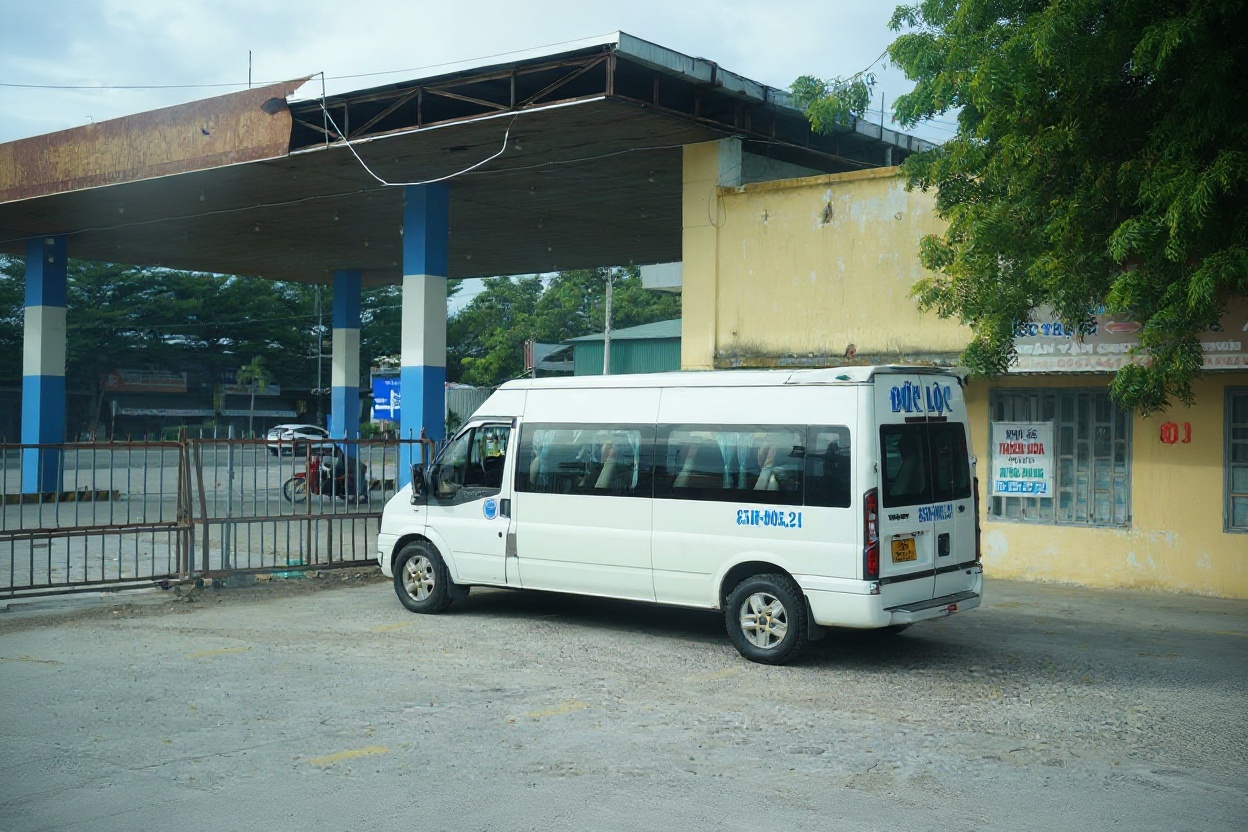
Giant Ibis is consistently recommended — comfortable seats, reliable timing, no unplanned stops. The cheap overnight buses are tempting (save a night’s accommodation) but the road quality at night and the operators’ record make them not worth it.
From Siem Reap, the route goes through Phnom Penh — budget 7–8 hours total, or take an overnight.
There’s no reliable train service. Ignore anything suggesting otherwise.
Where to Stay in Sihanoukville
The accommodation situation in Sihanoukville has changed enough that reviews from 2022 and earlier may not reflect the current options. Read 2024–2026 reviews specifically.
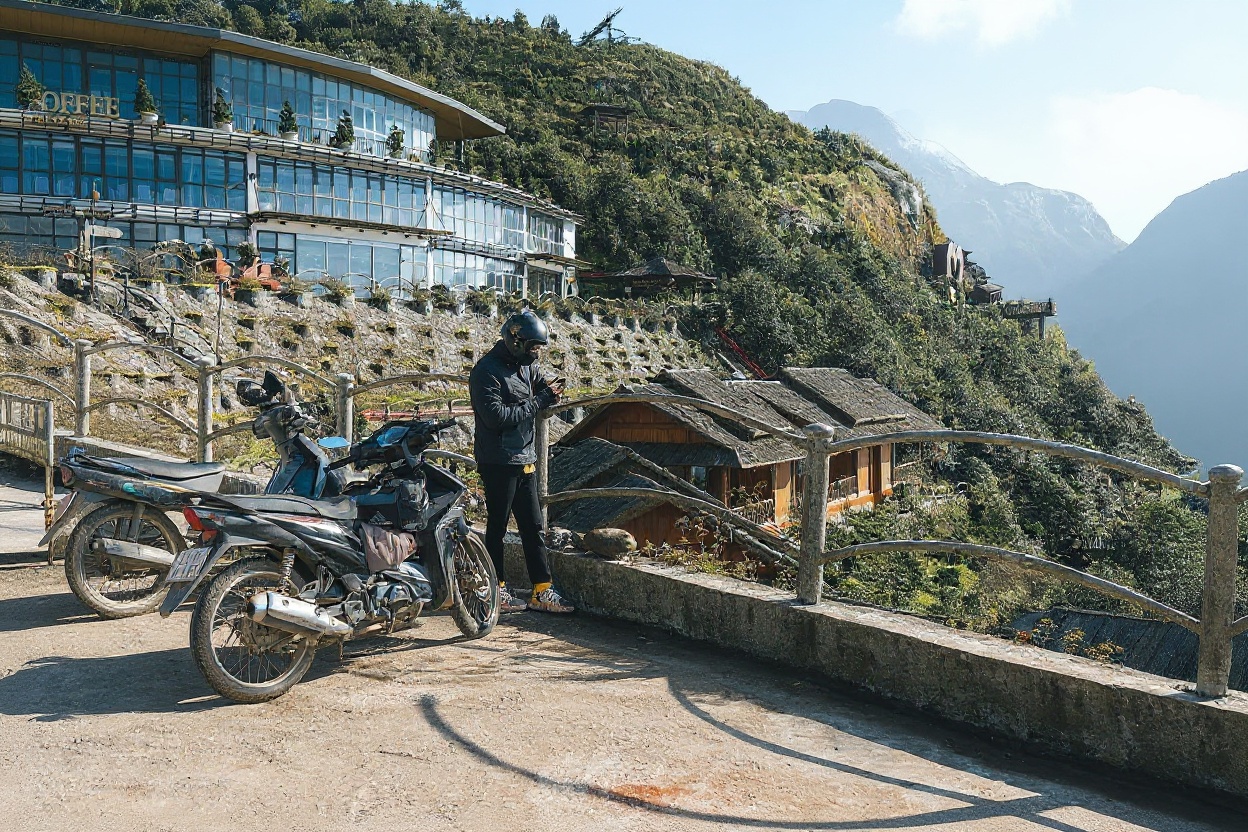
For the traveller-facing area, the strip along Ochheuteal Beach has the most functional options — budget guesthouses at $15–25/night, mid-range at $35–60. If you’re only stopping one night before the ferry, the pier area (Serendipity/Ochheuteal zone) is most convenient.
For island proximity and beach access, Ochheuteal Beach’s south end works best. The area immediately around the casinos is fine for walking through but not where I’d choose to sleep.
If you’re here for more than two nights, the Koh Rong Sanloem guesthouses are better value and a better experience than extending your mainland stay.
What to Eat in Sihanoukville
The seafood is the argument for eating here. The fishing boats still come in, and the restaurants near the pier serve fresh catch at prices that make sense — a plate of grilled fish with rice runs $5–8, a proper seafood platter $12–18 for two.
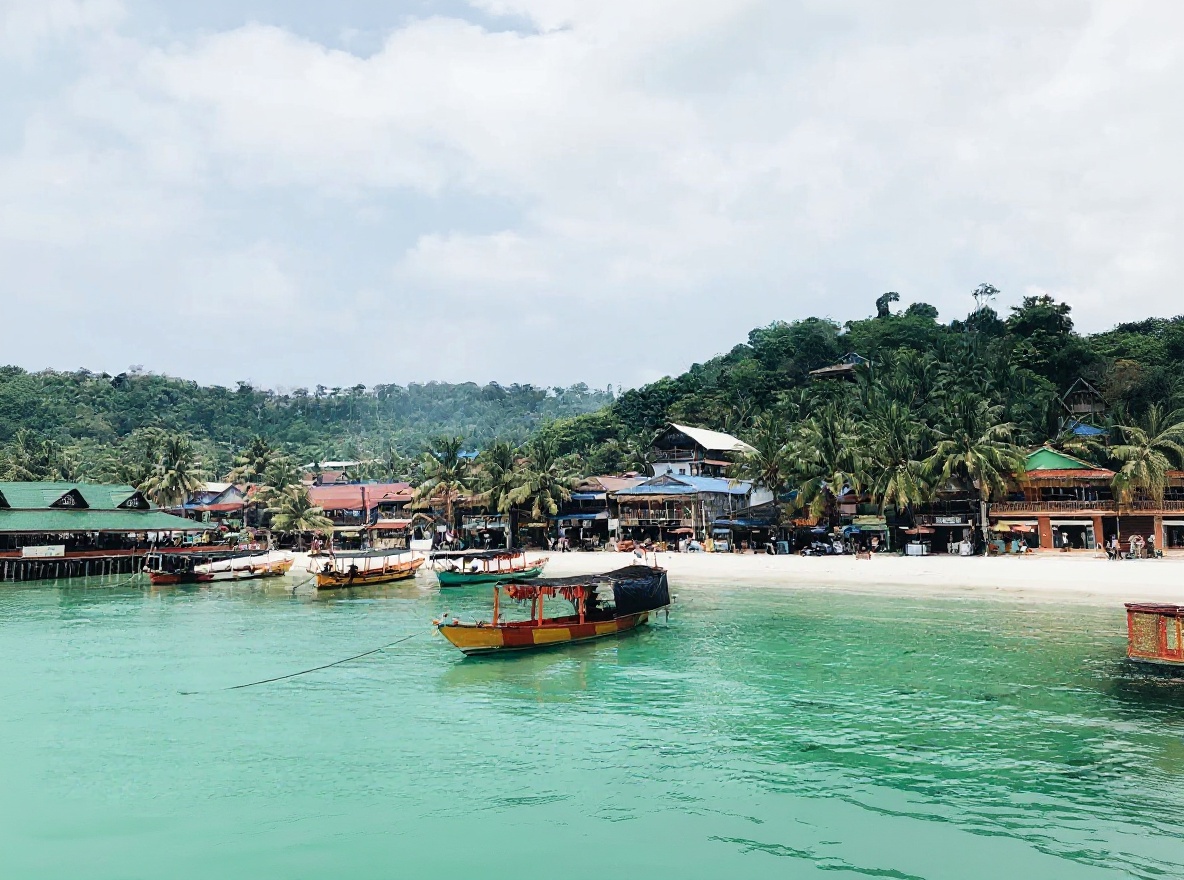
The tourist restaurant strip — running through the Ochheuteal/Serendipity zone — offers the full Cambodia menu: fish amok, lok lak beef, Khmer curry, banana flower salad. Prices are slightly inflated by beach proximity but not unreasonably so. Budget $6–10 for a main course at sit-down places.
Street food in the market area (Phsar Leu, the main local market on the northern side) runs $1–3 for noodles, rice dishes, and Cambodian sweets. This is where the local eating happens — get there before 8am for the full range of breakfast options.
The Chinese restaurants that came with the casino development are cheap and often very good — proper Shanghai-style dishes, hot pot, dumplings. A complete meal for $8–12. Underrated option if you want something different.
The Honest Version: Should You Go?
One night before the Koh Rong ferry: absolutely. Two nights for the beaches and seafood: fine. More than that? Unless you’re specifically drawn to what Sihanoukville is now, Kampot is two hours east and a completely different experience — quieter, more functional for longer stays, better restaurants.
“I wouldn’t recommend spending an extended period in Sihanoukville; a day or two is probably sufficient.” That’s a traveller’s view from Reddit, and it broadly matches mine.
The contrarian take that’s also worth acknowledging: “Sihanoukville is still a nice destination for a Cambodian family.” The beach is real. The ferry access is real. The food is good. People who go with the right expectations find it fine. It’s the gap between expectation and reality that creates the negative reviews.
Go. Don’t project the 2013 version onto it. Use it as the coastal base and island gateway it’s become. Then take the ferry to Koh Rong Sanloem and spend three days doing nothing in particular on a beach that genuinely earns that description.
Sihanoukville vs Kampot: Which to Choose
This is the question I get most from people planning the southern coast section of a Cambodia trip.
Sihanoukville: direct beach access, ferry to islands, seafood. The city itself is an acquired taste but the surrounding assets are real.
Kampot: river, Bokor Mountain, pepper farms that are some of the best in the world, caves at Phnom Chhnork, a colonial town centre that’s been preserved better than most. No beach — the coast is muddy here. Better for cooking classes, kayaking, cycling. A slower pace that’s genuinely restorative if you’ve been moving fast.
If you have time: do both. Bus between them is 2 hours, $8. Spend 2 nights in Sihanoukville (one for the mainland, one to get an early ferry to the island), 3–4 in Kampot. This is the southern Cambodia loop that works.
If you must choose only one: the honest answer depends on what you want. Coming for beach swimming and island time? Sihanoukville — the ferry access to Koh Rong Sanloem is the deciding factor and you cannot replicate it from Kampot. Coming for a slower base, good food, and day activities? Kampot wins on atmosphere and the quality of its café and restaurant scene. The itinerary that works for most people: 2 nights Sihanoukville (one mainland, one island), then 3 nights Kampot with a day trip to Bokor Mountain and an afternoon at a pepper farm. This totals 5 nights on the southern coast, which is the right amount before the rest of Cambodia calls.
Bus between Kampot and Sihanoukville runs multiple times daily, takes about 2 hours, costs $6–8 on a shared minibus or $15–20 private taxi direct. Most guesthouses in both towns can arrange onward transport.
The 3-Day Sihanoukville and Islands Plan
The version of this trip that actually works — not too rushed, not too stretched:
Day 1 (arrive Sihanoukville): Bus from Phnom Penh arrives around noon. Check into accommodation near Ochheuteal Beach. Afternoon on the city beach — not the best beach you’ll see, but fine for a first swim. Walk the pier area to book your ferry ticket for the next morning (or book online the night before). Dinner at the pier-approach seafood restaurants — fresh fish, cold beer, $12 total. Early night because the next morning starts at 7:30am.
Day 2 (Koh Rong Sanloem): Take the 9am ferry to Koh Rong Sanloem — about 60 minutes. Check into a beach guesthouse at Saracen Bay (budget $25–35/night for a basic bungalow with fan; $50+ for AC). The afternoon is swimming, hammock, and the kind of deep decompression that three weeks of temple tourism doesn’t provide. Dinner at the guesthouse restaurant — limited menu, fresh fish, fine. Bring snacks from the mainland because the island has limited shops and everything costs more.
Day 3 (island to mainland): Morning swim before the heat builds. Afternoon ferry back to Sihanoukville. Evening bus to Phnom Penh, Kampot, or wherever next. Or add a second island night — Koh Rong Sanloem is the kind of place where plans extend by 24 hours without you noticing.
The honest caveat: Koh Rong Sanloem accommodation is basic. The electricity on much of the island runs on generators — usually 6pm to midnight, solar panels for phone charging during the day. Bring a power bank. This is not a complaint; it’s information.
Ream National Park: The Day Trip Most People Miss
About 15km east of Sihanoukville, Ream National Park covers 210 square kilometres of mangrove forests, estuaries, and coastal water. The park is significantly undervisited compared to the islands — which means the boat tours through the mangroves are quiet, the birdlife is active, and the beach at the park’s end is the sort of thing you find when most people are on the ferry to Koh Rong.
The standard half-day boat tour through the mangroves costs $15–20 per person, booked through accommodation in Sihanoukville or directly at the park entrance. Dolphins are spotted occasionally in the estuary — not guaranteed but not rare either. Sea otters have been confirmed in the mangrove channels.
Getting there: taxi from central Sihanoukville runs about $10–12 one way. Or arrange through your guesthouse for a combined tour with pickup included. Morning tours (7–8am departure) are cooler and better for wildlife. By midday the mangrove channels get hot and the birds go quiet.
This is the Sihanoukville day trip that doesn’t appear in most guides because the islands get all the attention. If you have an extra half-day and the islands don’t fit the schedule — or you want a different pace — Ream is the alternative worth knowing about.
Understanding Why Sihanoukville Changed
The short version: between 2016 and 2019, Chinese investment flooded into Sihanoukville following a bilateral relationship between the Cambodian government and Chinese interests. Casinos (illegal for Cambodians, legal for foreigners) were the main investment vehicle. Hotels, restaurants, entertainment venues, and retail followed. The Chinese population of Sihanoukville went from a few hundred to an estimated 80,000 in three years.
Then, in 2019, Cambodia banned online gambling — the primary profit driver for many casino operations. Combined with COVID-19 travel restrictions in 2020–2021, the investment dried up abruptly. Many businesses closed. Construction on half-finished towers stopped. The Chinese population dropped sharply. What remained was the physical infrastructure of the boom — the casinos that survived, the apartment blocks, the Chinese-language signage — without the economic activity that created it.
That’s why Sihanoukville looks the way it does in 2026. Not because it “declined” but because it went through a rapid construction and partial collapse cycle in under five years. The beach is still there. The fishing boats still go out. The city is still functioning. But the urban landscape is one of incomplete boom-era development that nobody has quite decided what to do with yet.
One Reddit thread from 2024 put it plainly: “Sihanoukville has been ruined. Feels way more Cambodian and there was nothing wrong with it.” That’s the tension in a sentence — the casino boom removed something and what replaced it didn’t stick. The result is a city that’s neither the backpacker paradise it was nor the casino destination it briefly became.
For the visitor: this context makes Sihanoukville interesting rather than just confusing. It’s an object lesson in rapid urban transformation in Southeast Asia. If that interests you, walk the city as you would a place you’re trying to understand rather than just consume. There are plenty of those.
Month by Month: When to Actually Visit
November–January: Start of dry season. November is often the best month — the rain has stopped, ferry schedules are full, and tourist volume has not peaked yet. December and January are busiest (Christmas and New Year bring European and Australian visitors) but the weather is excellent: low humidity, temperatures in the low 30s, calm seas. Book ahead for this window.
February–April: Peak dry season. February is excellent. March gets hotter. April is very hot (35°C+) and Khmer New Year brings domestic travellers to the coast in large numbers — the beaches are busy but the atmosphere is genuinely Cambodian rather than tourist-facing.
May–June: Transition to wet season. May has increasing rain and the sea becomes choppy. Ferry schedules start thinning. June is possible but expect daily rain, higher humidity, and some island ferry routes may suspend. Prices drop, crowds thin.
July–September: Full wet season. Heavy rain, rough seas, most island ferry operators running reduced schedules or suspending. The islands are accessible with difficulty. Prices are low; the experience is compromised. Most independent travellers avoid this window.
October: End of wet season. Rain still possible but the sea starts calming. By late October dry season conditions begin returning. An underrated month for shoulder pricing with improving conditions.
Summary: November to April. Within that, November, February, and March are the sweet spots. December–January for best weather with higher prices and more crowds.
Where to Stay in Sihanoukville: James’s Actual Picks
Right, so accommodation here is more context-dependent than most places. Who you are and why you’re here dictates where you sleep.
Budget — one night before the ferry ($15–25/night): The guesthouses along Serendipity Beach Road, the strip connecting the pier area to Ochheuteal Beach, are functional for a single night. They’re not inspiring, but they’re close to the ferry terminal, have early check-out, and the staff are used to 5am departures. Monkey Republic Sihanoukville is the most reliable hostel in this zone — dorms $10–12, private rooms $22–28. No frills. Does what it promises.
Mid-range — two nights including beach time ($35–60/night): Look at the southern end of Ochheuteal Beach rather than the northern Serendipity strip. The Sokha area has guesthouses that are genuinely positioned for beach access with less of the bar noise. Cloud 9 Bungalows and similar operations in this zone run $35–50 and have the kind of outdoor areas that make the second morning coffee worthwhile. Book 2–3 days ahead in December–January.
If you specifically want proximity to the island ferry ($20–40/night): The area immediately around the Sihanoukville Ferry Terminal (the pier off Ekareach Street in the Serendipity zone) has a dense cluster of guesthouses. Prices are slightly elevated by location but the convenience of a 10-minute walk to the 9am boat is worth something when your alarm goes off at 7:30am.
What to avoid: Do not book accommodation in the areas immediately surrounding the major casino buildings. Not for safety reasons particularly — the streets are navigable — but because the environment (24-hour noise, irregular vehicle traffic, lighting that precludes sleep) is unpleasant in ways that reviews from 2023 onward consistently note. The casino hotel complexes themselves are fine if gambling is why you came. The surrounding residential/guesthouse fringe of those areas is not where you want to be for a beach break.
The island alternative: If you’re staying more than two nights and the islands are accessible (November–April), the guesthouses on Koh Rong Sanloem’s Saracen Bay genuinely outperform anything in Sihanoukville proper for the same money. $30–45 for a beachfront bungalow with generator power until midnight and a beach you don’t have to share with casino buses.
Practical Planning
- When’s the best time to visit Sihanoukville?
- November to April is dry season — the beaches are at their best and the sea is calm enough for the island ferries to run reliably. Avoid July and August: heavy rain, choppy seas, and some ferry routes suspend. May and October shoulder season is manageable but expect daily afternoon showers.
- Is Sihanoukville safe for solo travellers?
- Yes, with standard precautions. Stick to the beach area and established traveller zone. The organised crime that gives Sihanoukville its reputation operates in a different sphere from tourist activity. Use Grab (the Southeast Asia ride app) rather than unmarked taxis. Don’t wander into unfamiliar areas at night alone. This is standard Southeast Asia advice, not Sihanoukville-specific paranoia.
- How long do I need in Sihanoukville?
- One night before the island ferry is the minimum. Two nights if you want to see the beaches properly. More than three nights on the mainland itself isn’t necessary unless you have a specific reason — the islands offer a better experience for longer beach stays.
- Koh Rong or Koh Rong Sanloem?
- Koh Rong Sanloem for quieter beaches and a more relaxed pace — specifically Saracen Bay on the island’s east side. Koh Rong (the bigger island) for more accommodation options, more people, and a livelier evening scene at Long Set Beach. If you’re in your 20s and want beach bars: Koh Rong. If you want to actually decompress: Koh Rong Sanloem.
- What currency do I need?
- USD is the de facto currency for most tourist transactions — hotels, restaurants, and ferry tickets are all priced in dollars. KHR (Cambodian Riel) for small street purchases: $1 ≈ 4,100 KHR. ATMs dispense both. Carry small USD notes ($1, $5) for market food and beach vendors.
- Do I need to book the ferry in advance?
- In high season (December–February) and Khmer New Year (April), yes — book the day before at minimum, ideally 2–3 days ahead. The rest of the year, same-day booking is usually fine. Ferry times change — check the GTVC or Speed Ferry Cambodia websites for current schedules before you arrive.